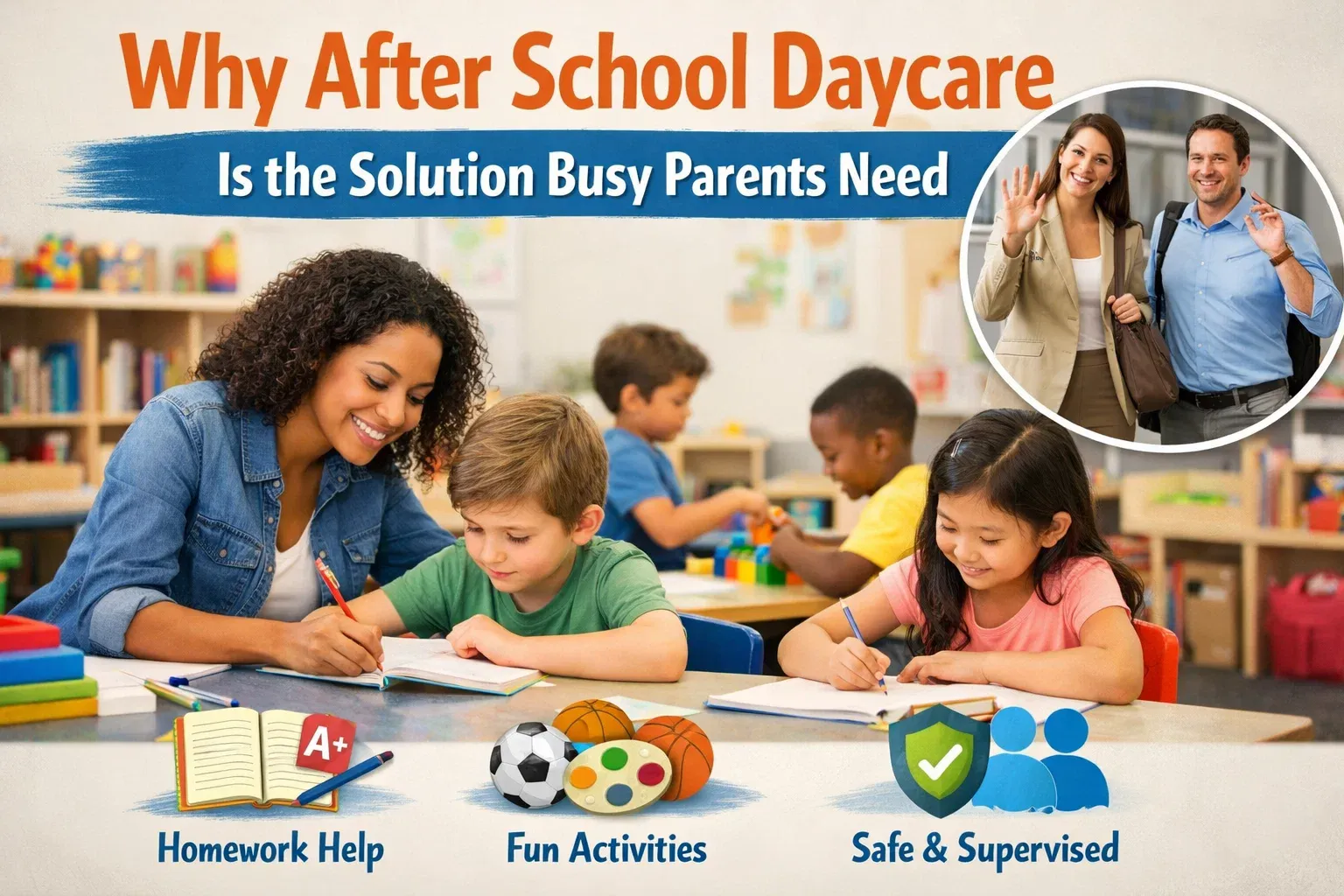
The school bell rings at 3 PM, but your workday doesn’t end until 5:30. You need a safe, engaging place where your child can thrive during those crucial hours between school dismissal and when you can pick them up. After school daycare bridges this gap, offering working parents peace of mind while giving children opportunities to learn, play, and grow in a structured environment.
Quality after school care transforms those afternoon hours from a scheduling headache into valuable time for your child’s development. The right program doesn’t just supervise—it enriches your child’s day with homework help, creative activities, and social interaction that builds confidence and independence.
What Makes After School Daycare Different from Regular Childcare
After school care for kids operates on a fundamentally different schedule and philosophy than traditional daycare programs. These specialized services pick up where the school day ends, typically running from early afternoon through early evening to align with parent work schedules.
The structure caters specifically to school-aged children who need less hands-on supervision than toddlers but still require adult guidance and meaningful activities. Programs recognize that children arriving from a full school day have different energy levels and needs than those starting fresh in the morning.
Most after school daycare programs provide transportation from local schools, which eliminates the logistical puzzle many parents face. Your child boards a supervised bus or van at school and arrives safely at the daycare center, where trained staff members welcome them into the afternoon routine.
Core Components of Quality After School Daycare Services
Homework Support and Academic Enrichment
Strong programs dedicate the first 30-45 minutes to homework time. Staff members create quiet spaces where children can focus on assignments, ask questions, and complete their schoolwork before recreational activities begin.
This structured approach means your child arrives home with homework finished or well underway. You reclaim your evenings for family time instead of battling over math problems and reading assignments.
Many centers go beyond basic homework help by offering tutoring in specific subjects or enrichment activities that complement classroom learning. STEM projects, reading circles, and educational games reinforce concepts while keeping children engaged.
Physical Activity and Outdoor Play
Children need to move after sitting in classrooms all day. Quality after school child care builds physical activity into the daily schedule through organized sports, playground time, and active games.
These movement breaks aren’t just fun—they’re essential for healthy development. Physical activity improves focus, reduces stress, and helps children develop coordination and teamwork skills.
Weather permitting, outdoor play gives kids fresh air and space to run. Indoor options like gymnasium activities or dance sessions ensure children stay active even on rainy days.
Creative and Social Activities
Art projects, music, drama, and hands-on crafts allow children to express themselves creatively. These activities provide balance to the academic focus of the school day and help children discover new interests and talents.
Structured group activities teach cooperation, communication, and problem-solving. Children learn to share, take turns, and work toward common goals—social skills that serve them throughout life.
Free play time gives kids agency to choose their activities and playmates. This unstructured time builds decision-making skills and allows friendships to develop naturally.
The Benefits Parents See with After School Daycare
Reliable, Consistent Care That Matches Your Schedule
Daycare after school hours eliminates the daily scramble to leave work early or coordinate multiple caregivers. You know exactly where your child is, who’s supervising them, and what activities fill their afternoon.
This consistency benefits children too. They thrive on routine and knowing what to expect each day. The familiar environment, regular staff members, and predictable schedule create a sense of security.
Most programs operate year-round and during school breaks, providing stability even when the academic calendar changes. You maintain your work commitments without disrupting your child’s care arrangement.
Professional Supervision in a Safe Environment
Licensed after school daycare centers meet strict safety standards and employ trained childcare professionals. Staff members undergo background checks, receive ongoing training, and maintain appropriate child-to-staff ratios.
The physical environment is designed with school-aged children in mind—age-appropriate equipment, secure facilities, and designated areas for different activities. Safety protocols cover everything from pickup procedures to emergency response plans.
You communicate directly with staff about your child’s day, any concerns, and upcoming events. This open dialogue keeps you connected even when you can’t be physically present.
Social Development and Peer Interaction
After school programs bring together children from different classrooms and sometimes different schools. This diversity expands your child’s social circle and exposes them to new perspectives and friendships.
Mixed-age groupings in some programs allow younger children to learn from older peers while giving older kids leadership opportunities. These interactions mirror real-world social dynamics and build emotional intelligence.
Staff members guide children through conflicts and teach problem-solving strategies. Your child learns to navigate disagreements, express feelings appropriately, and develop empathy for others.
Finding the Right After School Daycare Near Me
Start Your Search Locally
When searching for “after school daycare near me,” focus first on programs within a reasonable distance from your child’s school and your home or workplace. Proximity matters for pickup convenience and ensuring your child doesn’t spend excessive time in transit.
For families in North Georgia, exploring options for after school daycare Alpharetta reveals several quality programs designed specifically for the local community. Regional providers understand the school schedules, traffic patterns, and family needs unique to the area.
Visit daycarealpharetta.com to learn about programs that serve local families with flexible scheduling and comprehensive after school services.
Evaluate Program Quality and Fit
Schedule tours at several local after school daycare facilities. Observe how staff interact with children, the cleanliness and organization of spaces, and the overall atmosphere. Trust your instincts about whether the environment feels warm and welcoming.
Ask detailed questions about the curriculum, daily schedule, and staff qualifications. Find out how the program handles homework help, what activities are offered, and how they communicate with parents.
Request references from current families and check online reviews. Hearing directly from other parents provides valuable insights into day-to-day operations and how the program handles various situations.
Consider Your Child’s Individual Needs
Every child is different. An active child might thrive in a program emphasizing sports and outdoor activities, while a quieter child might prefer one with strong arts and reading components.
Does your child need extra academic support? Would they benefit from specific enrichment activities? Choose a program that aligns with your child’s temperament and goals.
Some children transition easily into new environments while others need more time to adjust. Discuss your child’s personality with program directors and ask how they support children during the transition period.
What to Expect During the After School Daycare Day
Arrival and Transition Time
Most programs build in a brief transition period when children first arrive. Kids grab a snack, use the restroom, and settle into the space before structured activities begin. This buffer helps them shift mentally from school mode to after school mode.
Staff members greet each child individually and do a quick check-in. They note if any child seems unusually tired, upset, or energized and adjust support accordingly.
Structured Activity Blocks
The afternoon typically divides into scheduled segments: homework time, physical activity, creative projects, and free play. This structure provides variety while ensuring all important components receive attention.
Flexibility within the structure accommodates different needs. A child who finishes homework quickly might start a craft project while others continue working. Another child struggling with an assignment receives one-on-one attention from a staff member.
Snack Time and Nutrition
After school child care near me should provide healthy snacks that fuel children’s bodies and brains. Look for programs offering fruits, vegetables, whole grains, and protein rather than sugary processed foods.
Snack time doubles as a social opportunity. Children gather around tables, practice conversation skills, and learn table manners in a relaxed setting.
Programs accommodate dietary restrictions and allergies. Inform staff about any food sensitivities during enrollment to ensure your child receives appropriate alternatives.
Special Considerations for School Breaks and Holidays
Extended Day Programs
Many after school daycare services extend their hours during school breaks, offering full-day care when school is not in session. These programs often feature special activities, field trips, or theme weeks that differ from the regular after school routine.
Planning ahead for these breaks ensures continuity of care. Enroll early for holiday programs as they often fill quickly with both regular attendees and families who need occasional care.
Summer Transition
Some centers operate separate summer camp programs while others extend their after school care into full-day summer sessions. Understand how your program handles summer months and whether your child’s spot remains secure.
Year-round enrollment often includes summer care, simplifying logistics and maintaining consistency for your child. They continue seeing familiar faces and following established routines even as the schedule expands.
The Financial Side of After School Care
Understanding Costs and Payment Structures
After school daycare costs vary based on location, program features, and hours needed. Weekly rates are common, though some programs offer daily drop-in options for families needing occasional rather than regular care.
Compare what’s included in the base fee. Does it cover transportation, snacks, field trips, and supplies, or are these additional charges? Understanding the complete cost picture helps you budget accurately.
Tax Benefits and Employer Programs
After school care expenses may qualify for the Child and Dependent Care Tax Credit, reducing your overall costs. Keep detailed records of payments and request documentation from your provider at tax time.
Some employers offer dependent care flexible spending accounts (FSAs) that let you pay for after school care with pre-tax dollars. This benefit can save hundreds of dollars annually for families using regular after school services.
Check whether your employer partners with specific childcare providers for discounted rates. Corporate partnerships sometimes extend to nearby after school programs, offering employees preferred pricing or priority enrollment.
Making the Transition Smooth for Your Child
Preparation and Communication
Talk with your child about starting after school care before the first day. Visit the center together, meet the staff, and tour the facility so they know what to expect.
Frame the experience positively without dismissing any nervousness they might feel. Acknowledge that trying something new can feel uncertain while expressing confidence they’ll enjoy the activities and make friends.
Establish a consistent pickup time and routine. Children feel more secure when they know the plan and can predict when you’ll arrive each day.
The First Few Weeks
Give your child time to adjust. Some kids settle in immediately while others need several weeks to feel completely comfortable. Stay in touch with staff about how your child is adapting and any challenges that arise.
Maintain open communication with your child about their experience. Ask specific questions about what they did, who they played with, and what they enjoyed rather than general “how was your day” queries that often yield one-word answers.
Celebrate small victories and progress. Notice when your child mentions a new friend, shares excitement about a project, or demonstrates growing independence and confidence.
Why After School Programs Build Stronger Families
Quality after school care does more than solve a scheduling problem. It provides children with enriching experiences that contribute to their development while giving parents the flexibility to maintain careers without sacrificing family wellbeing.
The relationships children build with staff and peers, the skills they develop through diverse activities, and the independence they gain from managing this part of their day all contribute to their growth. Meanwhile, parents experience reduced stress knowing their children are safe, supervised, and engaged.
When you find the right after school daycare center, it becomes an extension of your family’s support system. The program partners with you in raising confident, capable children who are learning valuable life skills in a nurturing environment.
Taking the Next Step
Choosing after school care is an important decision that deserves careful research and consideration. Start your search now by identifying programs in your area, scheduling tours, and asking the questions that matter most to your family.
The perfect program balances your practical needs with your child’s developmental requirements. It operates on a schedule that aligns with your work commitments while providing the structure, activities, and supervision that help your child thrive.
For Alpharetta families seeking comprehensive after school solutions, explore what local providers offer to find the best match for your family’s unique situation. Your child deserves care that nurtures their potential, and you deserve peace of mind knowing they’re exactly where they should be.
Frequently Asked Questions About After School Daycare
What is the difference between after school care and regular daycare?
After school care specifically serves school-aged children from dismissal time until parents finish work, typically running from 3 PM to 6 PM on school days. Regular daycare operates full days for younger children who aren’t yet in school. After school programs focus on homework completion, enrichment activities, and age-appropriate recreation for kids in kindergarten through middle school. These programs often provide transportation from local schools and structure their activities around children who’ve already spent a full day in the classroom. The staff-to-child ratios differ, the activities are designed for older kids, and the schedule aligns with the school calendar rather than operating as full-day infant and toddler care.
How much does after school daycare typically cost per week?
After school daycare costs range from $75 to $300 per week depending on your location, program quality, and hours needed. Urban areas like Alpharetta typically see rates between $125 and $250 weekly for standard programs running 3-4 hours each school day. This rate usually includes transportation from school, supervised homework time, snacks, and organized activities. Premium programs offering specialized instruction like foreign languages, advanced STEM projects, or private tutoring charge higher fees. Some centers offer sibling discounts of 10-20% or reduced rates if you pay monthly instead of weekly. Remember that these expenses may qualify for the Child and Dependent Care Tax Credit, and many employers offer flexible spending accounts that let you pay with pre-tax dollars, reducing your actual out-of-pocket cost.
What should I look for when choosing an after school program for my child?
Start by verifying the program’s licensing and staff qualifications—all caregivers should have background checks, CPR certification, and childcare training. Visit during operating hours to observe how staff interact with children and whether the atmosphere feels warm and structured. Ask about the daily schedule, homework support approach, and what activities are offered beyond basic supervision. Check the staff-to-child ratio, which should be around 1:10 to 1:15 for school-aged kids. Find out how they handle pickup procedures, emergencies, and parent communication. Consider practical factors like location convenience, transportation options from your child’s school, and whether hours align with your work schedule. Talk to current families about their experiences, and trust your instincts about whether your specific child would thrive in that environment.
At what age should my child start after school daycare?
Most children can start after school care once they enter kindergarten, typically around age 5 or 6, though many programs accept kids as young as 4 if they’re in pre-K. The ideal starting age depends more on your child’s readiness and your family’s needs than a specific number. School-aged children who can follow group instructions, use the bathroom independently, and handle basic self-care tasks typically transition smoothly into after school programs. Some children thrive immediately in the structured social environment, while others need a gentler introduction with just a few days per week initially. If your child struggles with long days away from home, consider starting with shorter programs or fewer days and gradually increasing as they adjust. Programs serve children through age 12 or 13, so there’s no rush—choose the timing that works best for your family’s situation and your child’s developmental stage.