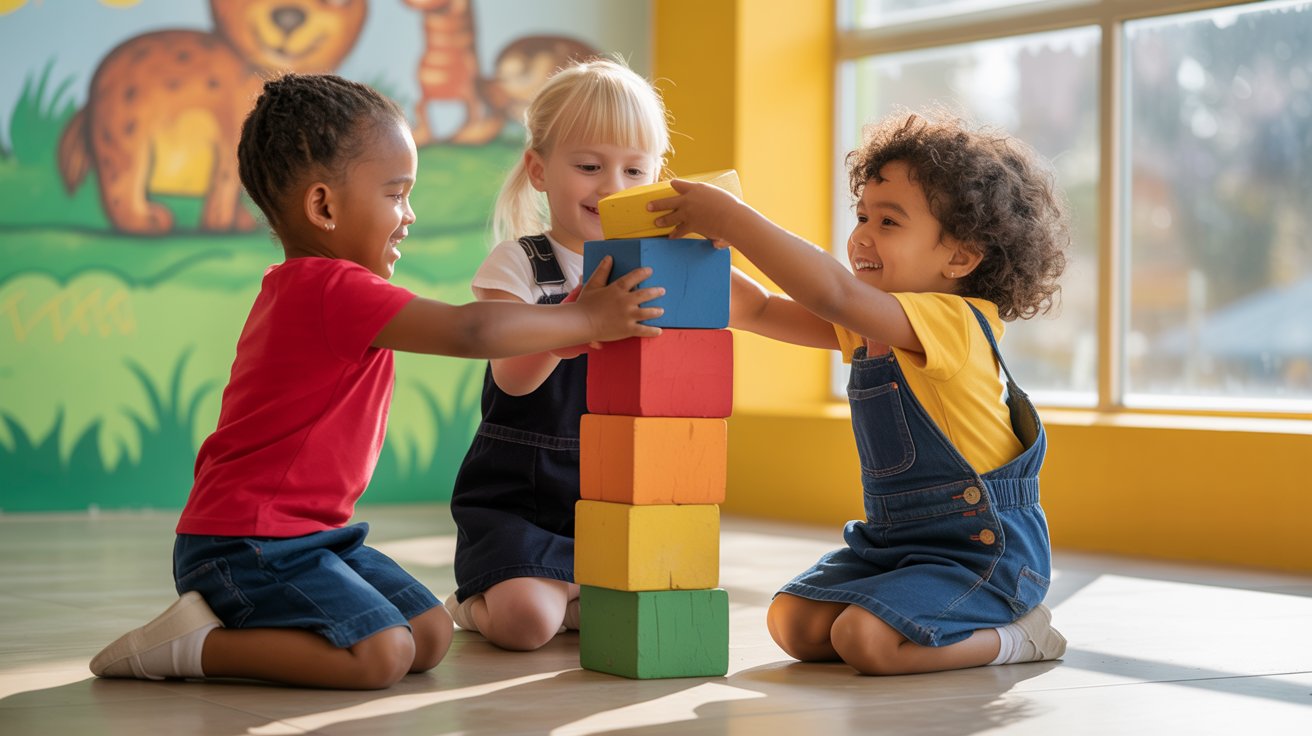
If you’ve ever watched a four-year-old in action, you know they’re bundles of boundless energy, curiosity, and imagination. One minute they’re building a tower out of blocks, the next they’re pretending to be a superhero saving the world. As parents and caregivers, we often wonder: what is the best activity for a 4 year old that will keep them engaged while supporting their development?
The truth is, there’s no single “perfect” activity. Four-year-olds are at a magical developmental stage where they’re learning to express themselves, building social skills, and discovering how the world works. The key is offering a variety of activities that nurture their growing minds, bodies, and hearts.
In this comprehensive guide, we’ll explore the most beneficial activities for preschoolers, why they matter, and how you can incorporate them into your child’s daily routine. Whether you’re a parent looking for inspiration or searching for the right childcare environment in Alpharetta, you’ll find practical ideas to help your four-year-old thrive.
Understanding the Four-Year-Old Mind
Before diving into specific activities, it’s helpful to understand what makes four-year-olds tick. At this age, children are experiencing tremendous growth across multiple domains.
Cognitively, they’re beginning to understand concepts like time, counting, and categorization. Their vocabulary explodes during this year, often reaching 1,500 to 2,000 words. They ask endless “why” questions because they’re genuinely trying to make sense of their world.
Physically, their gross motor skills are becoming more refined. They can hop on one foot, climb with confidence, and throw a ball with better aim. Fine motor skills are also developing rapidly, allowing them to manipulate small objects, use scissors, and hold a pencil with more control.
Socially and emotionally, four-year-olds are learning to play cooperatively with others, though they still need guidance in sharing and taking turns. They’re developing empathy and can often identify their own emotions and those of others.
Understanding these developmental milestones helps us choose activities that align with where our children are and where they’re heading.
The Power of Unstructured Play
When considering the best activity for a 4 year old, we must start with the foundation: free play. Unstructured playtime, where children direct their own activities without adult intervention, is crucial for development.
During free play, children exercise their imagination, make decisions, solve problems, and learn to entertain themselves. They might create elaborate pretend scenarios, build with blocks, or simply explore their environment. This type of play builds executive function skills, including planning, flexibility, and self-control.
Research from the American Academy of Pediatrics emphasizes that play is so important to child development that it should be considered a basic right of childhood. The benefits extend beyond immediate enjoyment to long-term academic and social success.
Create spaces in your home where your child can engage in open-ended play with toys like blocks, dolls, stuffed animals, dress-up clothes, and art supplies. Resist the urge to direct every moment, and you’ll be amazed at the creativity that emerges.
Creative Arts: Painting, Drawing, and Crafting
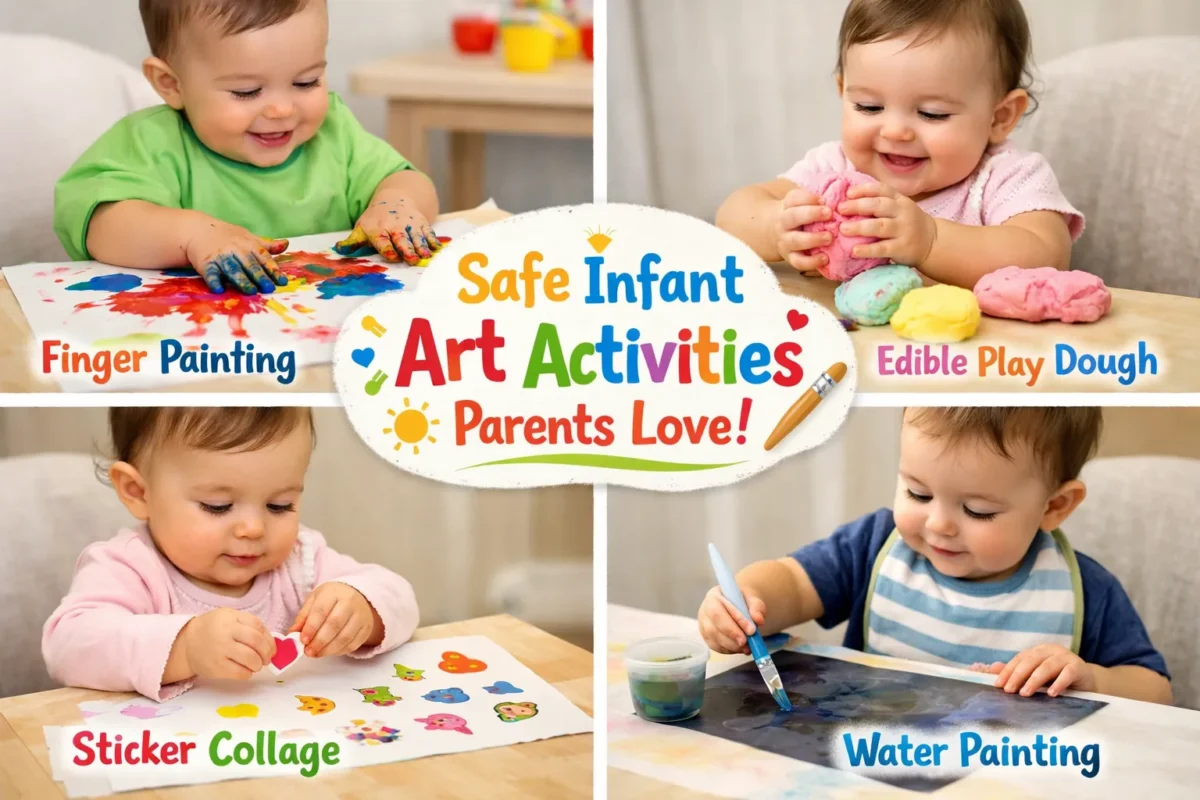
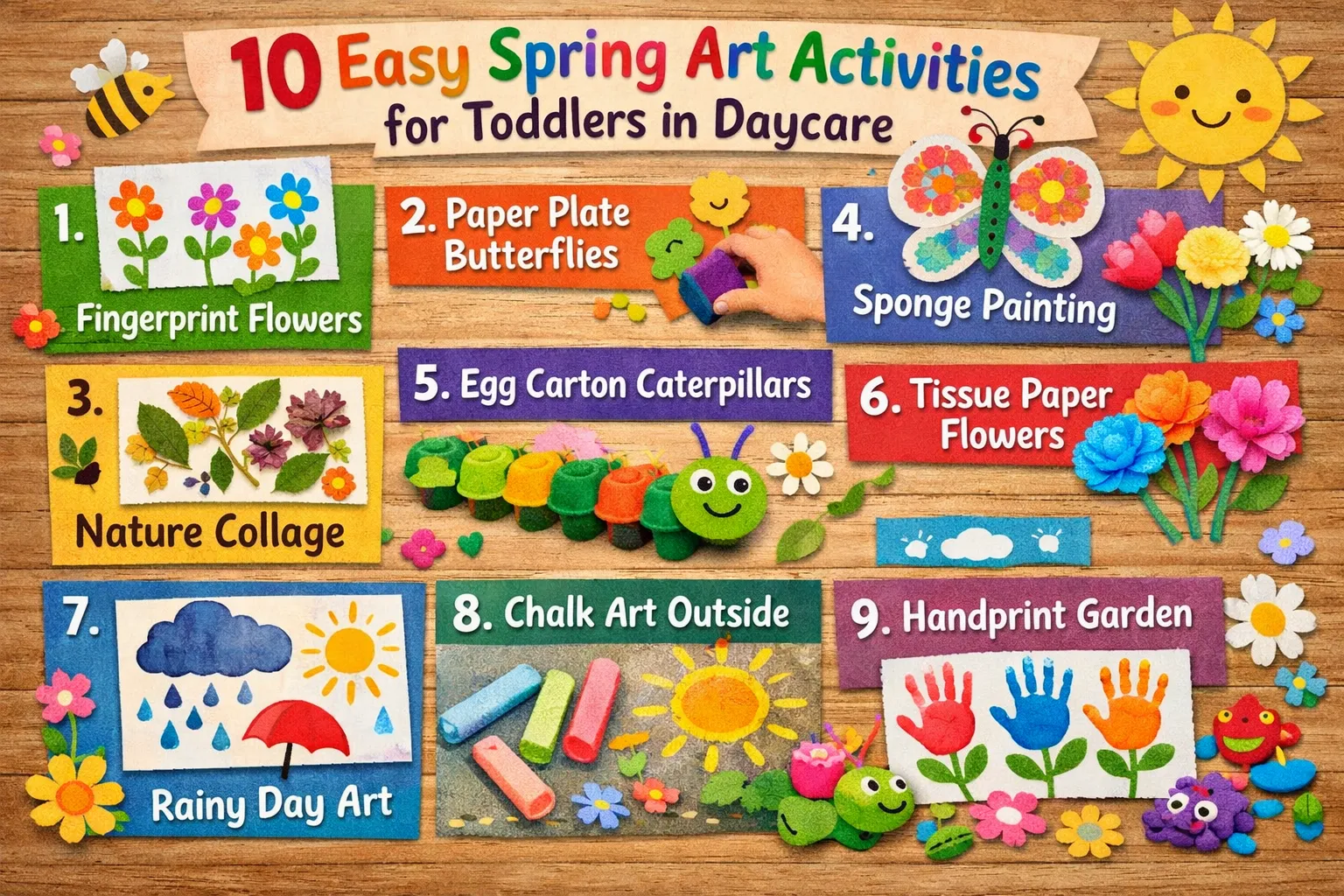
Artistic activities are among the most valuable for four-year-olds. When children engage in painting, drawing, or crafting, they’re not just making pretty pictures—they’re developing fine motor skills, learning about colors and shapes, expressing emotions, and building confidence.
Set up a designated art station in your home with washable paints, crayons, markers, colored paper, glue sticks, and child-safe scissors. Don’t worry about the mess (much)—the learning that happens is worth the cleanup.
Process art, where the focus is on exploration rather than creating a specific product, is particularly beneficial. Let your child mix colors, experiment with different textures, and create without the pressure of making something “perfect.” This approach fosters creativity and helps children understand that mistakes are part of learning.
Collage-making is another wonderful activity. Provide magazines, fabric scraps, natural materials like leaves or flowers, and various papers. As your child cuts, tears, and glues, they’re practicing important skills while exercising their artistic vision.
Outdoor Adventures and Physical Activities
Four-year-olds need to move, and outdoor play provides the perfect outlet for their energy while building physical competence and confidence. The best activity for a 4 year old often involves getting outside and being active.
Visit your local playground regularly. Climbing structures, swings, and slides help develop gross motor skills, spatial awareness, and courage. Parks offer opportunities for running, jumping, and exploring nature.
Organize simple games like tag, red light/green light, or Simon says. These activities teach children to follow directions, take turns, and enjoy physical activity in a social context.
Nature walks are fantastic for curious four-year-olds. Bring a small bag for collecting interesting leaves, rocks, or pinecones. Talk about what you see, hear, and smell. This connects children to the natural world and develops their observational skills.
Bike riding with training wheels or scootering are excellent for this age. These activities build leg strength, balance, and coordination while giving children a sense of independence and accomplishment.
Water play is always a hit, whether it’s running through sprinklers, playing at a splash pad, or simply pouring and measuring at a water table. Beyond being fun, water play teaches concepts like volume, cause and effect, and provides sensory stimulation.
Building and Construction Play
Blocks, LEGOs, magnetic tiles, and other construction toys are incredibly valuable for four-year-olds. When children build, they’re learning about physics, engineering, problem-solving, and spatial relationships.
Building activities also encourage planning and sequential thinking. A child might decide to build a castle, then figure out what shapes they need and in what order to place them. When the tower falls, they learn about stability and balance, then try again with modifications.
Provide a variety of building materials. Traditional wooden blocks are excellent, but so are foam blocks, cardboard boxes, and even pillows and cushions. Each material offers different possibilities and challenges.
Encourage your child to build specific things—a house for their toy animals, a bridge for their cars, or a tower as tall as they are. These challenges promote goal-directed behavior and persistence.
Music and Movement Activities
Music is a powerful learning tool for young children. Singing songs, playing instruments, and dancing are all wonderful activities that support language development, mathematical thinking (through rhythm and patterns), and physical coordination.
Sing together throughout the day—in the car, at bath time, during chores. Traditional children’s songs often include repetition and rhyme, which help with memory and language skills. Make up silly songs about your daily routine, which can make transitions easier and more fun.
Provide simple instruments like shakers, tambourines, drums, or xylophones. Even homemade instruments like rice-filled containers or pots and wooden spoons work beautifully. Experimenting with different sounds teaches cause and effect while developing rhythm and coordination.
Dance parties are pure joy for four-year-olds. Put on music and move freely, trying different styles—slow and fast, big movements and small, low to the ground and reaching high. This builds body awareness and gross motor skills while releasing energy.
Movement games like “freeze dance” or moving like different animals combine music with following directions and imaginative play. These activities are perfect for transitioning between quiet and active times.
Reading and Storytelling
While we’re focusing on the best activity for a 4 year old in terms of play, we can’t overlook the importance of reading. Sharing books with your four-year-old supports literacy development, vocabulary growth, imagination, and bonding.
Make reading a daily habit, whether it’s a bedtime story ritual or afternoon quiet time with books. Choose a variety of books—fiction and nonfiction, rhyming stories and informational texts, books about emotions and books about the world.
Interactive reading is particularly valuable. Ask questions as you read: “What do you think will happen next?” or “How do you think that character feels?” Point out letters and words, especially ones that start with the same sound as your child’s name.
Beyond reading, encourage storytelling. Your child can create stories using toys, puppets, or simply their imagination. You might start a story and take turns adding to it, building narrative skills and creativity.
Visiting your local library is an adventure in itself. Let your child pick out books that interest them, and participate in story time programs where they can enjoy books in a group setting with other children.
Dramatic Play and Role-Playing
The pretend play that four-year-olds love so much isn’t just adorable—it’s essential for development. When children engage in dramatic play, they’re practicing social roles, processing experiences, developing language, and exercising their imagination.
Set up areas in your home that encourage pretend play. A play kitchen, doctor’s kit, tool set, or dress-up box can spark hours of imaginative scenarios. Rotate toys and props to keep the play fresh and interesting.
Join in when invited, but follow your child’s lead. If they want you to be the patient at their doctor’s office, play along. This shared play strengthens your relationship while giving you insight into how your child thinks and feels.
Puppet shows are another form of dramatic play that four-year-olds enjoy. Simple sock puppets or store-bought ones can act out stories, express feelings, or just have silly conversations.
Simple Science Experiments and Discovery
Four-year-olds are natural scientists, constantly asking questions and experimenting with how things work. Supporting this curiosity through simple, hands-on activities nurtures critical thinking and a love of learning.
Try easy experiments like mixing baking soda and vinegar to create a reaction, making “oobleck” from cornstarch and water to explore non-Newtonian fluids, or growing seeds in clear containers to watch roots develop.
Nature exploration is science in action. Observe insects with a magnifying glass, collect and sort natural materials, or watch clouds and talk about weather.
Cooking together is applied science and math. Measuring ingredients, watching how heat changes food, and following sequential steps all teach important concepts while creating something delicious.
The key is to encourage questioning and experimentation rather than just demonstrating. Ask “What do you think will happen?” and “Why do you think that happened?” These conversations build scientific thinking.
Games and Puzzles
While the best activity for a 4 year old might seem like pure free play, structured games and puzzles offer unique benefits. They teach rule-following, turn-taking, patience, and good sportsmanship while developing specific cognitive skills.
Simple board games designed for preschoolers help with counting, color recognition, and following multi-step directions. Games like Candy Land, Chutes and Ladders, or matching games are appropriate for this age.
Puzzles are excellent for developing spatial reasoning, problem-solving, and persistence. Start with 24 to 48-piece puzzles and adjust based on your child’s interest and ability. Jigsaw puzzles, shape sorters, and pattern-matching activities all build important skills.
Memory games strengthen concentration and recall. You can play with cards, or create your own version by hiding objects and asking your child to remember what was there.
Card games like Go Fish introduce children to strategy and luck, and provide wonderful family bonding time. According to the National Association for the Education of Young Children, games that involve taking turns and following rules help children develop self-regulation and social skills.
Cooking and Baking Together
Inviting your four-year-old into the kitchen might seem chaotic, but cooking together is an incredibly rich learning activity. It involves math (measuring, counting), science (watching ingredients change), reading (following recipes), and life skills.
Choose simple recipes where your child can participate meaningfully. Making sandwiches, stirring muffin batter, rolling cookie dough, or assembling pizza are all within a four-year-old’s capabilities with supervision.
Safety is paramount. Teach kitchen safety rules clearly, provide child-safe tools, and closely supervise. But don’t let fear prevent you from including your child—the benefits are worth the extra care required.
The pride your child feels when serving food they helped prepare is wonderful to see. It also encourages them to try new foods, which can be helpful for picky eaters.
Social Play and Playdates
While we often think of activities as things children do with objects or materials, social interaction is itself a crucial activity for four-year-olds. Playing with peers teaches cooperation, negotiation, empathy, and communication.
Regular playdates provide opportunities for children to practice social skills in a relatively controlled environment. Start with one friend at a time for shorter periods, gradually extending as children become more comfortable.
Provide toys that encourage cooperative play, like blocks, balls, dress-up clothes, or art supplies. Be nearby to facilitate if conflicts arise, teaching problem-solving and emotion regulation in real-time.
Group activities like music classes, swimming lessons, or story time at the library offer structured social experiences where children interact with peers under adult guidance.
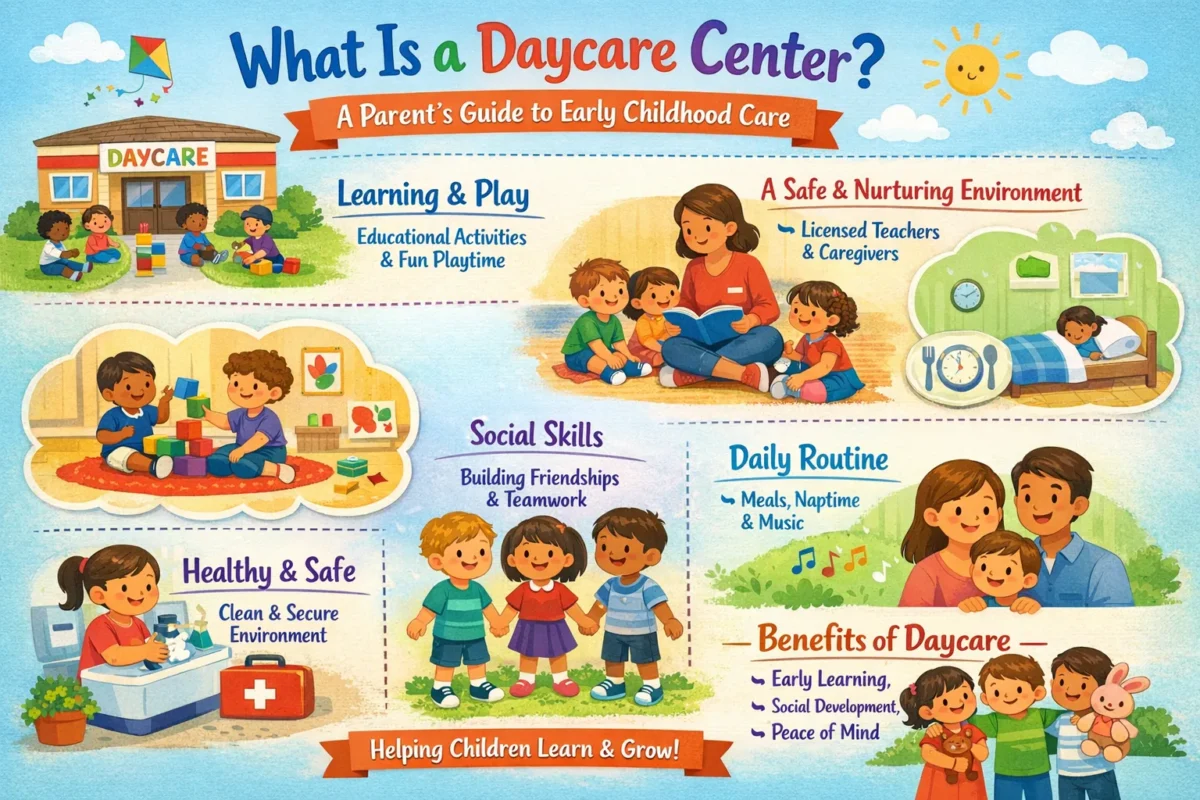
A quality preschool or daycare program provides regular, consistent social experiences with trained educators who facilitate positive peer interactions. At daycarealpharetta.com, we understand the importance of creating environments where children develop both academic and social skills through carefully planned activities and play opportunities.
Sensory Play Activities
Four-year-olds benefit greatly from activities that engage their senses. Sensory play supports cognitive growth, fine motor development, language development, and problem-solving skills.
Create sensory bins filled with materials like rice, beans, sand, or water. Add scoops, containers, and small toys. Children can pour, measure, bury, and discover, engaging in focused, calming play.
Playdough is a classic sensory material that never gets old. Whether store-bought or homemade, it offers endless possibilities for squishing, rolling, cutting, and creating. Add tools like cookie cutters, rolling pins, or plastic knives to extend the play.
Finger painting, shaving cream play, or working with kinetic sand provide tactile experiences that many children find soothing and engaging.
Sensory activities are particularly valuable for children who need help with self-regulation. The focused, repetitive nature of sensory play can be calming and organizing for active minds and bodies.
Balancing Screen Time with Active Play
In our digital age, it’s important to address screen time when discussing the best activity for a 4 year old. While some high-quality educational programming can support learning, excessive screen time displaces more beneficial activities and can impact development.
The American Academy of Pediatrics recommends limiting screen time for preschoolers to one hour per day of high-quality programming, ideally watched together with an adult who can help children understand what they’re seeing.
When screens are used, choose interactive, educational content over passive viewing. Apps that require problem-solving or creativity are better than those that simply entertain.
Most importantly, ensure that screen time doesn’t replace the physical, creative, and social activities that are so crucial for four-year-olds. If your child has been watching a show, follow it up with active play to balance sedentary time.
Creating Daily Routines That Include Varied Activities
The secret to supporting your four-year-old’s development isn’t finding the single best activity for a 4 year old—it’s providing a rich variety of experiences within a consistent routine.
Structure your day to include a balance of active and quiet activities, indoor and outdoor play, structured and unstructured time, solo and social experiences. This rhythm helps children feel secure while ensuring they receive diverse learning opportunities.
A sample day might include morning outdoor play, followed by a creative activity like art or building, then lunch and a quiet time with books, afternoon free play or a playdate, and evening time with family including cooking together or playing games.
Transitions between activities can be challenging for four-year-olds. Give warnings (“We’ll clean up in five minutes”), use songs or routines to mark transitions, and be patient with the process.
Finding the Right Learning Environment
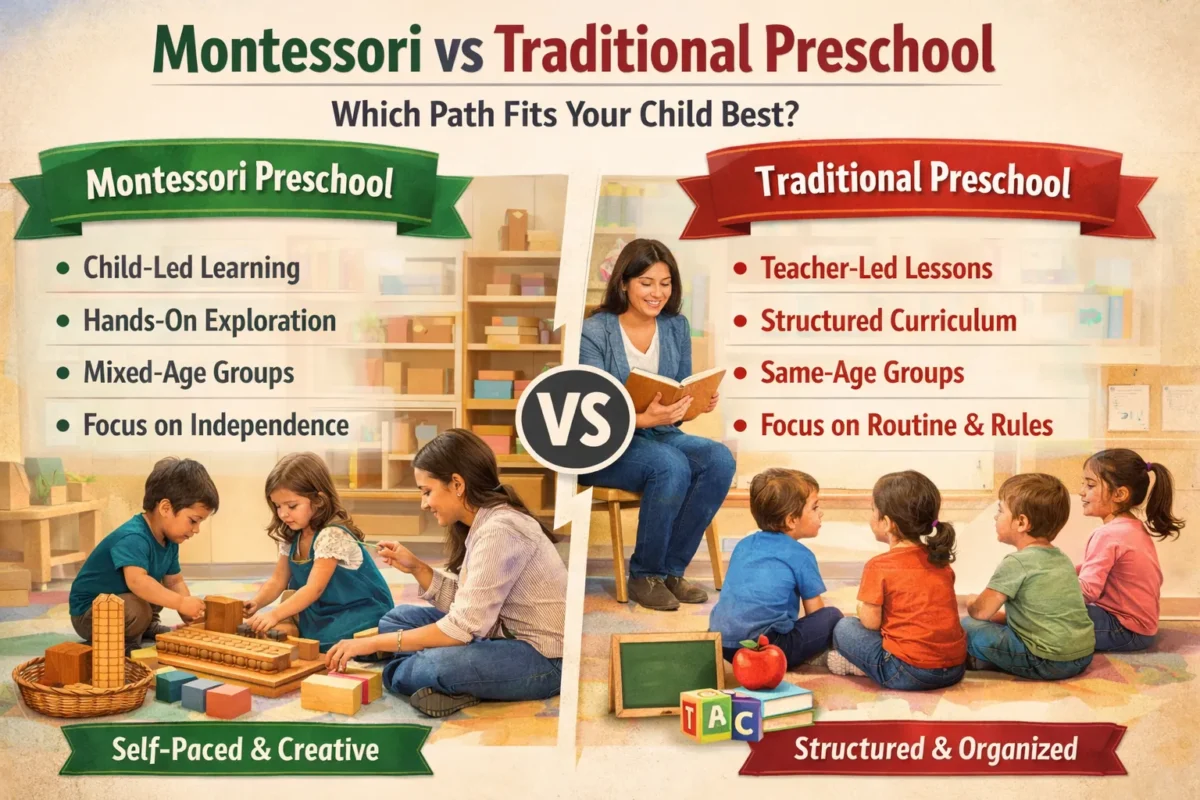
While activities at home are invaluable, many families also seek quality care and education for their four-year-olds outside the home. The right preschool or daycare program extends learning through professionally designed activities, social opportunities, and trained educators.
When evaluating programs, look for environments that offer a balance of activities similar to what we’ve discussed: creative arts, physical play, building and construction, dramatic play, early literacy and math activities, and plenty of time for free play.
Quality programs understand that the best activity for a 4 year old varies by the individual child and changes throughout the day and year. They provide choices, follow children’s interests, and create engaging learning centers.
Conclusion: The Joy of Discovery
As we’ve explored, there’s no single answer to what is the best activity for a 4 year old. Four-year-olds are complex, growing individuals who benefit from a rich tapestry of experiences that engage their minds, bodies, and hearts.
The most important thing you can do is be present and engaged with your child. Whether you’re building a block tower together, reading a story, splashing in puddles, or simply talking about their day, you’re supporting their development and strengthening your relationship.
Pay attention to what captures your child’s interest and build on those fascinations. If they love dinosaurs, incorporate dinosaurs into art projects, dramatic play, books, and outdoor adventures. Following your child’s lead ensures they remain engaged and motivated.
Remember that childhood is not a race. Your four-year-old doesn’t need to be enrolled in multiple classes or constantly entertained. What they need most is time to play, explore, create, and just be a child, supported by caring adults who nurture their natural curiosity and joy.
Ready to Give Your Child the Best Start?
If you’re looking for a nurturing environment where your four-year-old can thrive through play-based learning, social development, and engaging activities, we invite you to visit us at Daycare Alpharetta. Our experienced educators create joyful learning experiences tailored to each child’s developmental stage, ensuring they grow socially, emotionally, physically, and cognitively. Contact us today to schedule a tour and see how we bring learning to life for preschoolers in our community!
Frequently Asked Questions About Activities for 4-Year-Olds
What should a 4-year-old be doing all day?
A typical day for a four-year-old should include a healthy mix of activities rather than one thing all day long. Plan for 60-90 minutes of active outdoor play, creative activities like art or building for 30-45 minutes, quiet time with books or puzzles, pretend play, and plenty of free playtime where they direct their own fun. Balance structured activities (like mealtimes, preschool, or organized games) with unstructured time where they can explore independently. Remember, children this age also need 10-13 hours of sleep, including any naps. The key is variety—switching between active and calm, social and solo, indoor and outdoor keeps four-year-olds engaged and supports all areas of their development.
How do I keep my 4-year-old busy at home?
Keeping a four-year-old engaged at home is easier when you set up activity stations they can access independently. Create an art corner with supplies they can reach, a building area with blocks or LEGOs, a reading nook with cushions and books, and a dress-up bin for pretend play. Rotate toys every few weeks to maintain novelty. Simple activities like helping with cooking, playing with playdough, building pillow forts, doing puzzles, or having dance parties require minimal setup but provide great engagement. Don’t underestimate the power of water play—whether it’s a bath with toys or washing dishes at the sink with supervision. The goal isn’t to entertain them constantly; giving them space for independent play actually builds creativity and self-reliance.
What activities help a 4-year-old develop social skills?
Playdates with one or two peers are excellent for developing social skills at age four. During these interactions, children practice sharing, taking turns, negotiating roles in pretend play, and resolving conflicts with gentle adult guidance. Board games and cooperative activities like building something together or working on a group art project teach turn-taking and teamwork. Enrolling your child in group activities like story time at the library, swimming lessons, or music classes provides structured social experiences. At home, role-playing with puppets or dolls lets children practice social scenarios in a safe way. A quality preschool program also offers daily opportunities to develop friendship skills, empathy, and communication with trained teachers facilitating positive interactions.
How much outdoor time does a 4-year-old need?
Four-year-olds should get at least 60-90 minutes of outdoor play daily, weather permitting. This doesn’t have to be all at once—two 30-45 minute sessions work well, perhaps one in the morning and one in the afternoon. Outdoor time provides essential benefits: it develops gross motor skills through running, climbing, and jumping; offers sensory experiences with nature; provides vitamin D from sunlight; and helps children burn energy so they sleep better. On rainy or extremely hot days, indoor active play can substitute, but outdoor time in fresh air is ideal for physical and mental health. Even a simple walk around the neighborhood, playing in the backyard, or visiting a local park counts. The more varied outdoor experiences you can offer—playgrounds, nature trails, splash pads, open fields—the better for your child’s development.