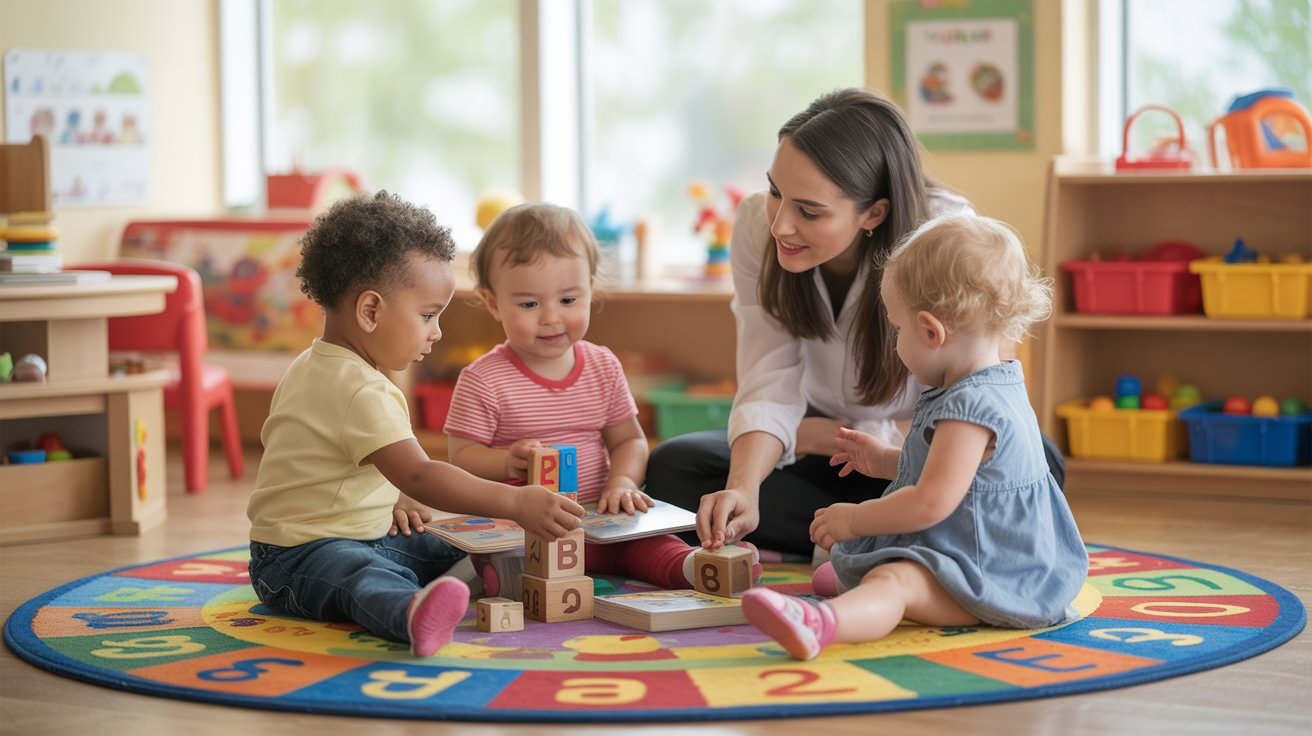
When parents consider daycare for their little ones, the decision often comes with a mix of emotions—excitement, worry, and plenty of questions. Will my child be okay? Will they thrive? One of the most reassuring aspects of quality childcare is the incredible foundation it builds for children’s social abilities. The early years are a crucial window for learning how to connect with others, and daycare offers a unique environment where these essential life skills naturally flourish.
Why Social Skills Matter More Than Ever
Think about the skills that help us navigate life successfully—sharing, taking turns, resolving conflicts, reading social cues, and communicating our needs effectively. These aren’t abilities we’re born with; they’re learned through countless interactions, observations, and experiences. Research shows that social skills development increases brain capacity, cognitive ability, and improves mental health, making early childhood the perfect time to build this foundation.
The Daycare Advantage: A Natural Laboratory for Social Learning
Children with strong social competencies tend to experience better outcomes across multiple areas of their lives. They typically demonstrate higher self-esteem, improved academic performance, and better emotional well-being. The connections formed in early childhood don’t just help kids make friends—they shape how children approach learning, handle challenges, and view themselves in relation to the world around them.
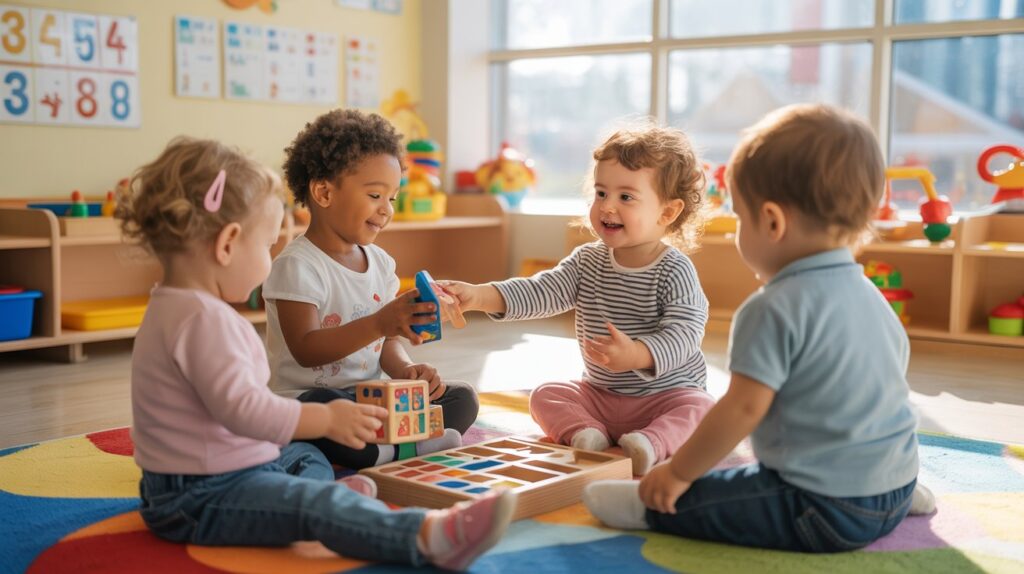
What makes daycare such an effective setting for developing these crucial abilities? It’s the combination of structured guidance and organic peer interaction. Unlike staying home where playmates might be limited or sporadic, daycare immerses children in a consistent social environment with diverse opportunities to practice interpersonal skills daily.
Learning Through Daily Interactions
Social development in daycare happens organically throughout the day. During circle time, children learn to listen while others speak. At the snack table, they practice patience and sharing. In the dramatic play area, they negotiate roles and collaborate on imaginative scenarios. These seemingly simple moments are actually rich learning experiences where children discover how to cooperate, communicate, and connect with peers.
Interaction with peers fosters valuable social skills early on, helping children learn to relate to others and understand emotions. When your toddler watches another child’s face crumple before tears start flowing, they’re learning empathy. When they wait for their turn on the slide despite really wanting to go now, they’re building self-control. These micro-moments add up to major developmental gains.
The Role of Trained Caregivers
Quality childcare providers do more than supervise—they actively model and teach social behaviors throughout the day. Child care providers model positive behaviors such as active listening, empathy, and respectful communication, instilling core values that promote healthy interactions and relationships. When a conflict arises between children, skilled educators guide them through resolution rather than simply solving the problem for them.
This approach helps children develop their own toolkit for handling social challenges. They learn to use their words to express frustration, understand another child’s perspective, and find solutions that work for everyone involved. These are skills that will serve them well throughout their entire lives.
The Research Behind Social Development in Daycare
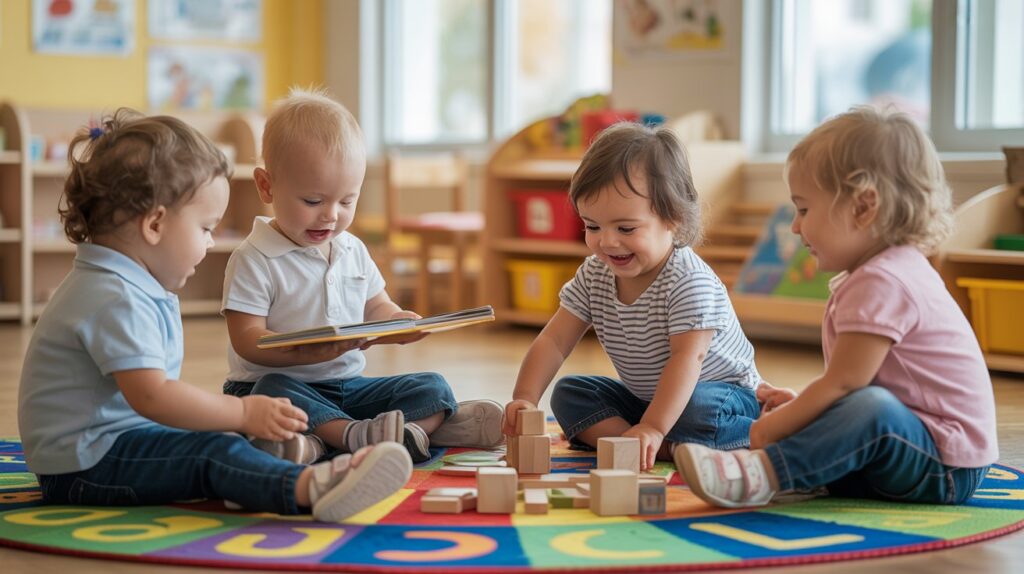
The benefits of early peer interaction aren’t just anecdotal—they’re backed by substantial research. High-quality daycare centers have been linked to developing traits like empathy, resilience, and prosocial behavior in children later in life. Studies tracking children over many years show that the social foundation built in quality early childhood programs continues to support positive outcomes well into adulthood.
Children as young as five years old who attend daycare demonstrate the ability to be more patient and adjust their communication style to meet the needs of different aged playmates. This flexibility in social interaction is a sophisticated skill that emerges from regular practice in diverse social settings.
Interestingly, recent research has also dispelled some common concerns about daycare. A 2022 analysis of data from five different countries found no association between daycare attendance and behavior problems, putting to rest worries that children might pick up negative behaviors from peers.
Key Social Skills Developed in Daycare Settings
Social development in daycare encompasses a wide range of abilities that children practice and refine:
Communication Skills: From learning to express needs verbally to understanding non-verbal cues like facial expressions and body language, daycare provides constant opportunities for communication practice. Through conversations with peers and caregivers, children learn the importance of verbal expression, active listening, and understanding social cues, which fosters empathy, respect, and cooperation.
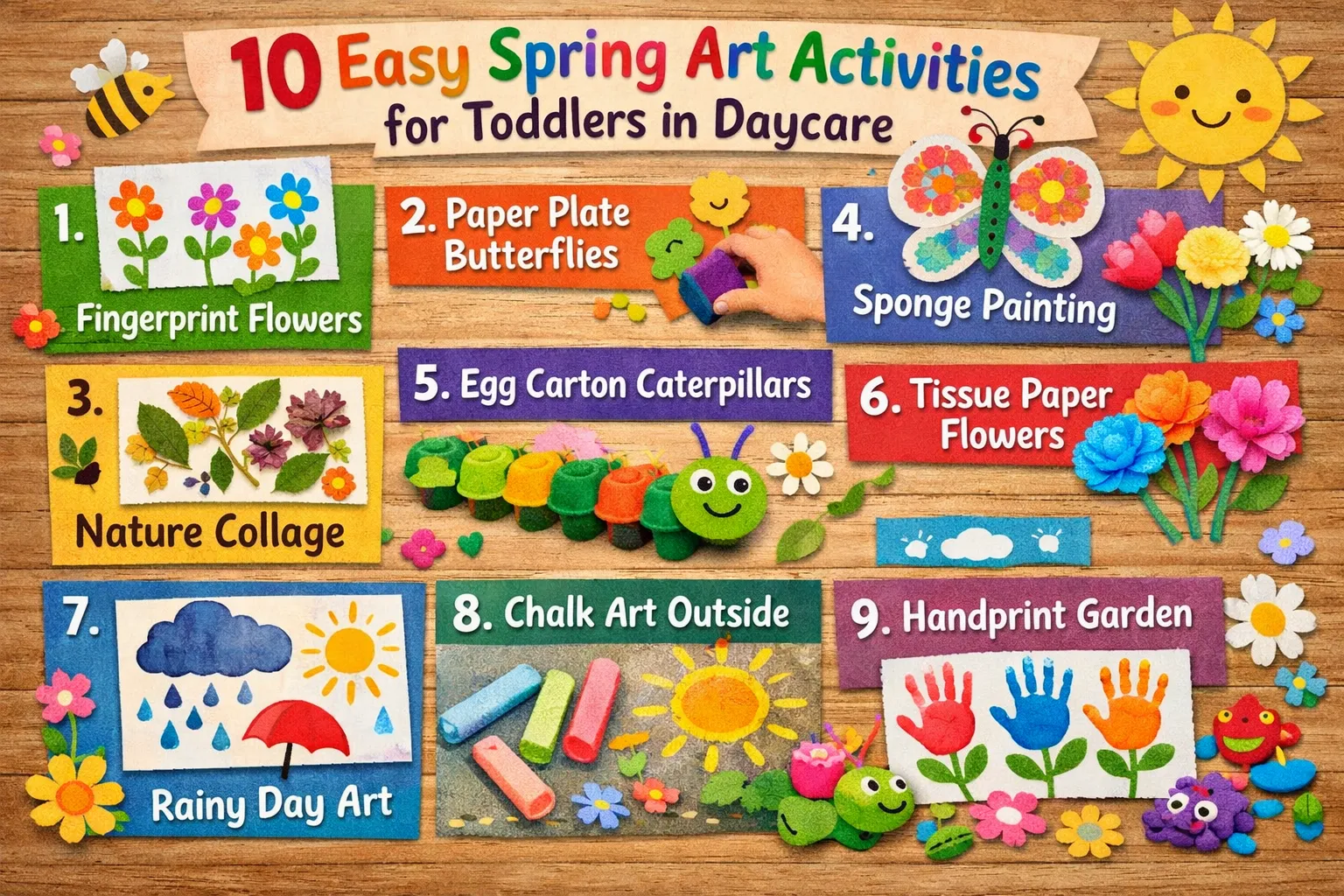
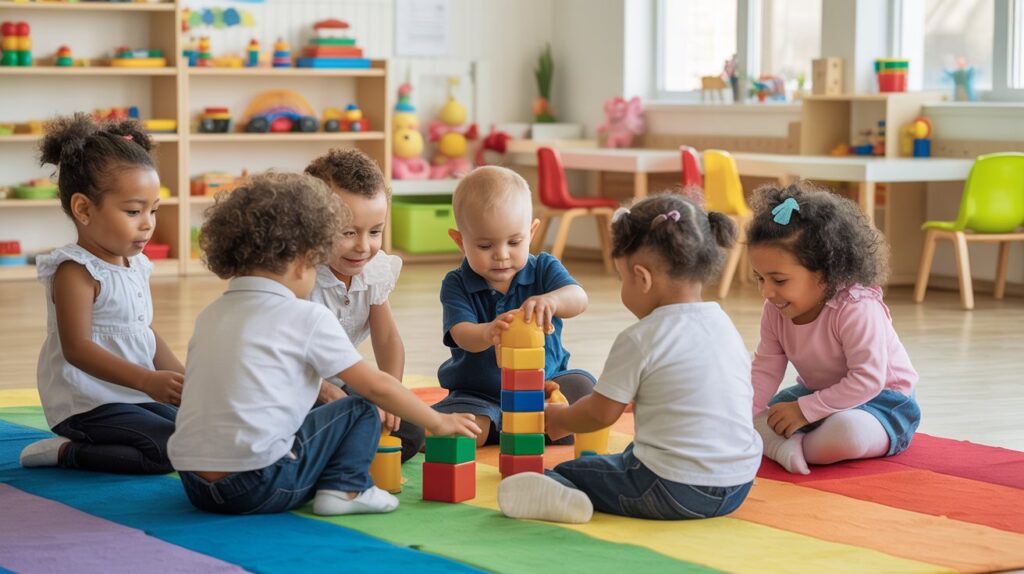
Cooperation and Teamwork: Group activities teach children that working together often produces better results than going solo. Whether building a block tower with a friend or participating in a group art project, children discover the value of collaboration.
Emotional Regulation: Being part of a peer group means experiencing a full range of emotions—joy, frustration, disappointment, excitement. In the daycare environment, children learn better self-regulation and emotional recognition through activities that promote empathy and conflict resolution. They develop strategies for managing big feelings in healthy ways.
Conflict Resolution: Disagreements are inevitable when children play together, but they’re also valuable learning opportunities. With guidance from caregivers, children learn to navigate conflicts constructively, finding compromises and solutions that respect everyone’s needs.
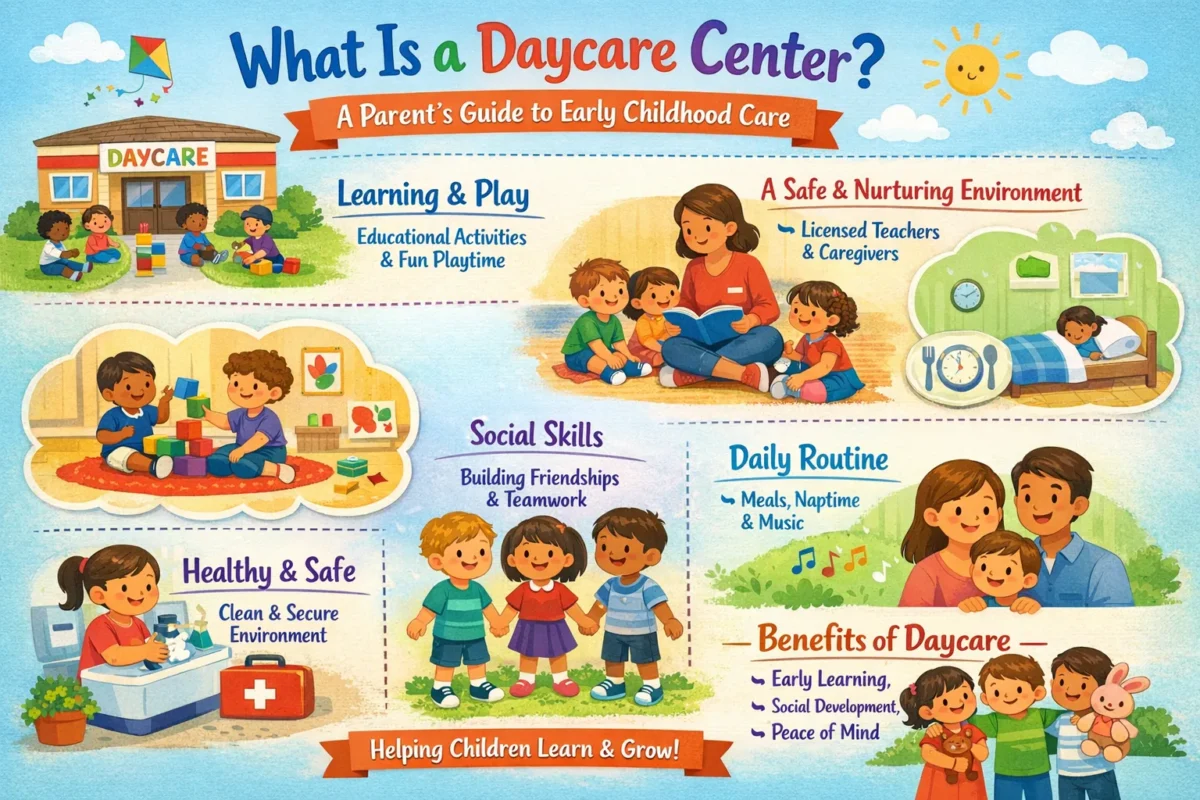
Friendship Skills: Making and keeping friends requires a complex set of abilities—initiating conversations, sharing interests, showing kindness, and maintaining connections over time. The daily consistency of daycare allows genuine friendships to develop and deepen.
Social Development in Daycare Supports Academic Success
The connection between social skills and academic achievement might not be immediately obvious, but it’s powerful. Children with higher social competence tend to have better academic performance because they can form stronger friendships, collaborate effectively with peers, and communicate their thoughts and ideas with confidence.
Think about a typical classroom scenario: children who can work cooperatively in groups, focus despite distractions, and communicate questions clearly are better positioned to absorb and apply new information. These social-emotional abilities help children be more engaged in classes and participate more in collaborative learning activities, creating a positive cycle where social skills enhance learning, and successful learning experiences build confidence.
What Quality Looks Like
Not all childcare settings provide equal opportunities for social growth. High-quality programs share certain characteristics that maximize developmental benefits:
Warm, Responsive Relationships: High-quality early care goes beyond basic health and safety requirements to provide warm, responsive relationships with educators, stimulating and developmentally appropriate curricula, and ongoing training for educators. Children thrive when they feel secure and valued.
Appropriate Adult-to-Child Ratios: Smaller group sizes and adequate staffing allow educators to provide individualized attention and meaningful guidance during social interactions.
Structured Yet Flexible Environment: Quality programs balance planned activities with free play, giving children both guided social learning experiences and opportunities for organic peer interaction.
Diverse Social Opportunities: Exposure to children of various ages, backgrounds, and abilities enriches social learning and builds understanding and acceptance of differences.
Supporting Your Child’s Social Journey
While social development in daycare offers tremendous benefits, parents remain their child’s most important teachers. You can support this growth by:
- Talking with your child about their day, asking open-ended questions about their interactions and friendships
- Reinforcing the social skills they’re learning at daycare through home activities and family interactions
- Maintaining consistent communication with caregivers to stay informed about your child’s social progress and any areas where they might need extra support
- Arranging playdates or activities that allow daycare friendships to extend beyond the classroom
- Modeling the social behaviors you want your child to develop—children are always watching and learning from us
Building Blocks for Life
The social skills children develop in quality daycare settings extend far beyond the early years. Consistent socialization and play in early childhood have been associated with higher levels of empathy, resilience, and prosocial behavior later in life. These foundational abilities influence how children navigate school, form relationships, handle workplace dynamics, and engage with their communities throughout their entire lives.
When you drop your child off at daycare, you’re not just ensuring they’re safe and cared for while you work—you’re investing in a critical period of social learning that will shape who they become. Every shared toy, every resolved conflict, every new friendship, and every moment of cooperation is building the interpersonal intelligence they’ll carry forward into their future.
The early childhood years offer a unique window for social learning, and quality daycare environments make the most of this opportunity. By providing consistent peer interaction, skilled guidance, and countless opportunities to practice social skills in supportive settings, daycare helps children build the relational capabilities that will serve them for a lifetime. That’s something worth celebrating as you navigate the journey of early childhood care for your family.
Frequently Asked Questions
What age should my child start daycare for the best social development?
Most experts recommend starting daycare between 12 to 18 months for optimal social development, though children can benefit at any age. At this stage, toddlers are naturally curious about other children and ready to begin learning basic social skills like sharing and taking turns. That said, even infants benefit from being around other babies, and preschoolers who start later still gain tremendous social advantages. The key is choosing a quality program with age-appropriate activities and trained caregivers who understand developmental milestones. Remember, it’s never too late to start—children are remarkably adaptable and will begin forming friendships and learning social skills whenever they enter a supportive childcare environment.
How long does it take for a shy child to adjust socially to daycare?
Most children adjust to daycare within 2 to 4 weeks, though shy or sensitive children may need 4 to 6 weeks to feel fully comfortable. During this transition period, you might notice clinginess at drop-off or quietness around peers—this is completely normal. Quality daycare providers are experienced in helping reserved children warm up at their own pace through gentle encouragement and one-on-one attention. You can support your shy child by keeping goodbyes brief but warm, maintaining a consistent drop-off routine, and talking positively about school at home. Many parents are surprised to discover that their “shy” child is actually quite social once they feel secure—teachers often report different behavior than what parents see during pickup time. Trust the process and maintain open communication with your child’s caregivers about their progress.
Will my child pick up bad behavior from other kids at daycare?
While children do learn from observing peers, research shows that kids in quality daycare programs don’t develop more behavior problems than those who stay home. In fact, structured childcare environments teach children to distinguish between appropriate and inappropriate behaviors through consistent guidance from trained educators. When conflicts or negative behaviors arise—like hitting, biting, or refusing to share—experienced caregivers use these as teaching moments to help all children learn better ways to interact. The key is choosing a daycare with clear behavioral expectations, positive discipline strategies, and good communication with parents. Most children actually develop stronger self-control and better behavior regulation through daycare because they practice following rules, managing emotions, and resolving conflicts in a structured setting with professional support.
How can I tell if my child is developing good social skills at daycare?
You’ll notice several positive signs that indicate healthy social development. Your child might start talking about specific friends by name, express excitement about seeing certain classmates, or recreate daycare activities at home through pretend play. Other good indicators include your child showing increased independence, using words to express feelings instead of acting out, demonstrating empathy when others are upset, and showing improved sharing and turn-taking skills. During pickup, observe how your child interacts with peers—do they say goodbye to friends, show teachers their artwork, or engage in play before leaving? Regular communication with caregivers is essential too. Ask specific questions like “Who does my child play with most?” or “How does my child handle conflicts?” Quality programs provide regular updates on social milestones and will alert you to any concerns. Remember that social development isn’t always linear—some setbacks are normal as children navigate increasingly complex peer relationships.