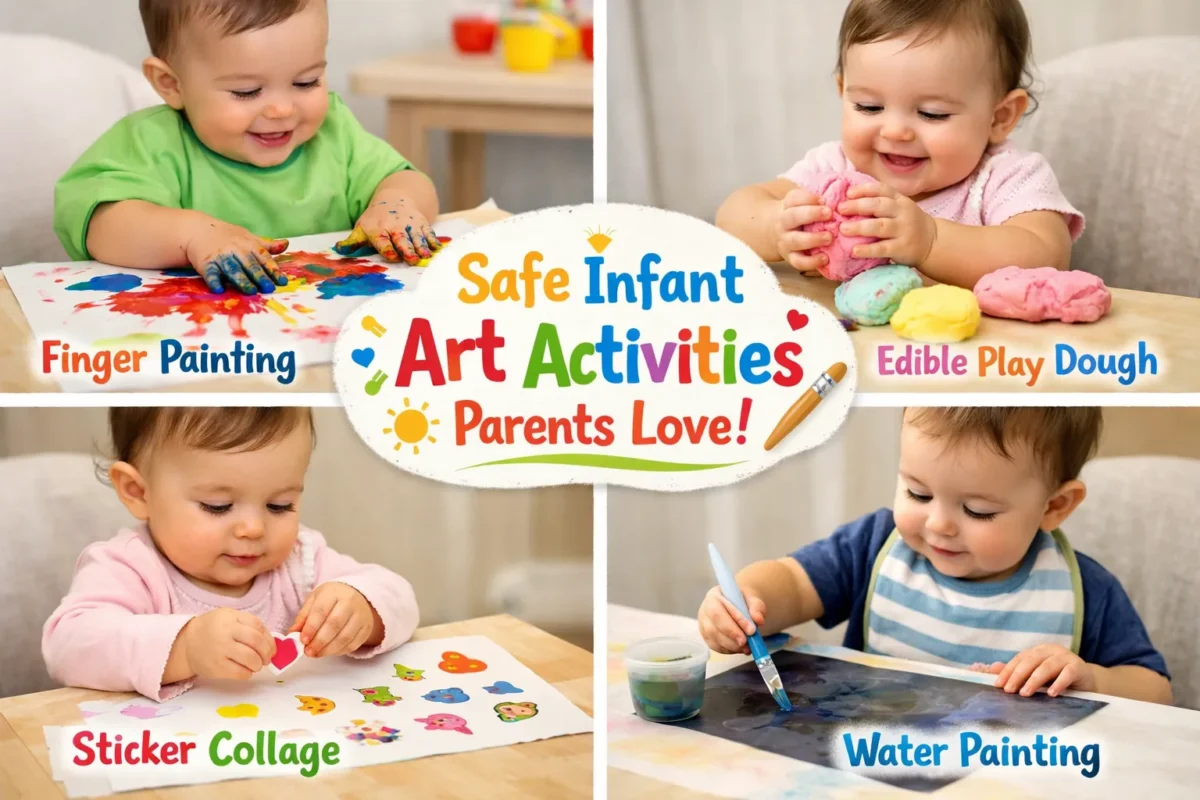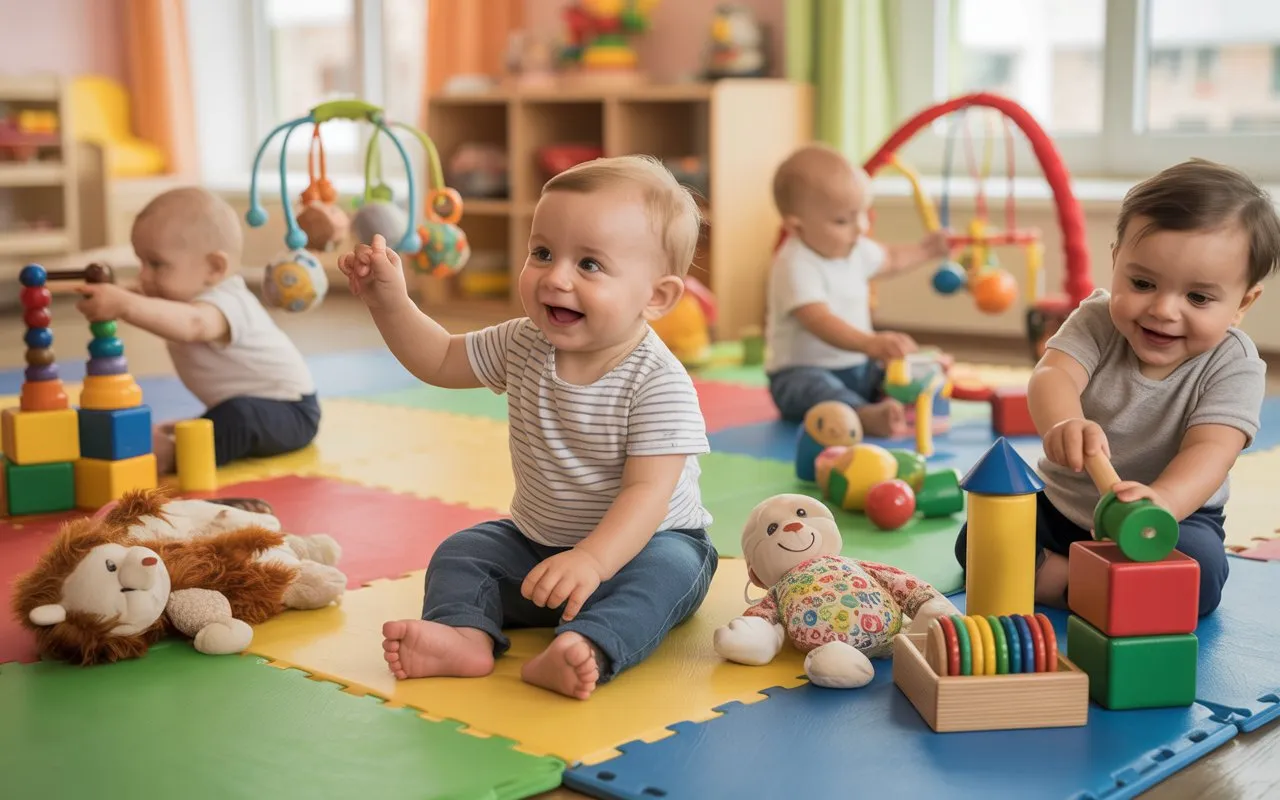
a cozy space where tiny hands reach for colorful textures, where gentle coos echo through carefully arranged corners, and where every element has been thoughtfully designed to spark curiosity and wonder. Creating an engaging play environment for infants isn’t just about filling a room with toys—it’s about crafting a nurturing space where the youngest learners can safely explore, discover, and grow.
As daycare providers, we hold the beautiful responsibility of shaping the earliest learning experiences for infants. The environment we create becomes their first classroom, their laboratory for discovery, and their safe haven for development. When done right, a well-designed infant play space supports every aspect of a baby’s growth—from their first attempts at rolling over to their early babbles that will one day become words.
In this guide, we’ll walk through practical, proven strategies for creating a play environment that truly engages infants while supporting their developmental milestones. Whether you’re setting up a new infant room or refreshing your existing space, these insights will help you design an environment where little ones thrive.
Understanding Infant Development and Environmental Needs
Before we dive into specific design elements, it’s essential to understand what infants need from their environment. Babies aren’t simply smaller versions of older children—they have unique developmental needs that should guide every decision we make about their space.
During their first year, infants experience rapid development across all domains. They develop through play, learning by exploring their surroundings and interacting with others. Their brains are forming millions of neural connections every day, and each sensory experience contributes to this incredible growth.
The most effective infant environments recognize that babies learn through their senses and through movement. They need spaces that invite them to touch, see, hear, and explore safely. Movement supports children’s growth by allowing them to practice physical skills, develop thinking skills, and practice independence.
Creating Zones That Support Different Activities
Think about your infant room as a collection of purposeful zones rather than one open space. Dividing the room into areas helps create an organized and meaningful environment, making it easier for babies to understand where different types of play happen and for caregivers to facilitate various infant activities for daycare.
Consider establishing these essential zones:
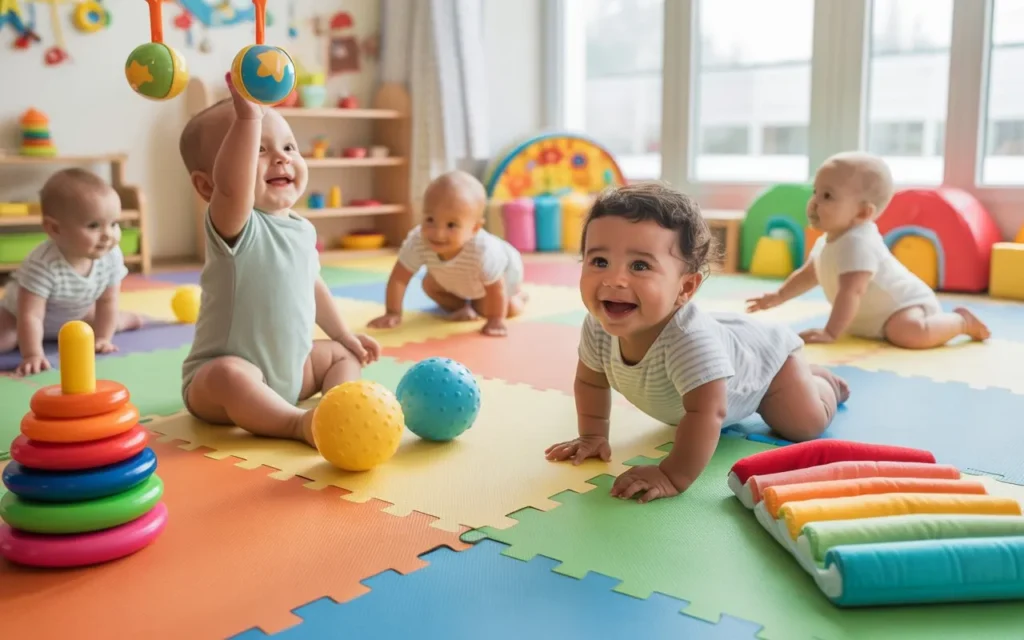
Tummy Time and Movement Area: This should be your largest zone, offering plenty of clean, safe floor space. Cover it with soft, washable mats that provide cushioning while allowing freedom of movement. Keep this area clear of clutter so infants can practice rolling, scooting, crawling, and eventually pulling themselves up without obstacles.
Quiet Corner: Babies need calm spaces too. Create a cozy nook with soft pillows, dim lighting, and perhaps a small bookshelf with board books. This becomes a retreat when infants feel overstimulated or simply need a peaceful moment.
Sensory Exploration Zone: Dedicate an area for tactile experiences where infants can explore different textures, materials, and safe sensory objects. This is where much of the magic happens—where curious fingers discover the difference between smooth and rough, soft and firm.
Caregiver Connection Space: Don’t forget to design comfortable spots where caregivers can sit on the floor to engage with infants at their level. Whether it’s feeding time, book reading, or simple face-to-face interaction, these moments of connection are precious.
Selecting the Right Materials and Toys
The materials you choose for your infant space matter tremendously. Infant activities for daycare should incorporate items that are safe, developmentally appropriate, and genuinely engaging for babies at different stages.
Safety First, Always
Every single item in your infant room must pass the most rigorous safety standards. All materials should be evaluated for safety and choking hazards. This means no small parts that could pose choking risks, no sharp edges, and nothing that could break easily. All toys should be regularly inspected for wear and tear.
Choose items that can withstand constant mouthing—because let’s be honest, everything is going in those little mouths! Ensure all materials are non-toxic and can be easily cleaned and sanitized between uses.
Developmentally Appropriate Selections
Different age groups within the infant range need different types of materials. For younger infants who aren’t yet mobile, focus on items they can grasp, shake, and explore while lying on their backs or tummies. Rattles, soft textured balls, and high-contrast visual stimuli work wonderfully.
As infants become mobile, they need materials that support this new skill. Provide equipment to climb on, crawl into, or that children can pull themselves up on, that are sturdy and safe. Soft climbing blocks, tunnels, and push toys become increasingly important.
Consider incorporating these engaging materials:
Mirrors: Shatterproof mirrors at floor level fascinate infants and support self-awareness development. Watching their own expressions and movements captivates babies and encourages reaching and moving.
Texture Boards: Create boards or mats featuring different fabrics—corduroy, velvet, satin, fleece. Let tiny fingers discover the wonderful variety of how things feel.
Natural Materials: Wood blocks, fabric scraps, and safe household items like wooden spoons offer rich, open-ended play opportunities. These simple items often engage infants more than complex electronic toys.
Books: Yes, even for the tiniest babies! Choose sturdy board books with simple pictures, high-contrast images, and different textures. Reading to infants builds early literacy skills and creates bonding opportunities.
The Power of Open-Ended Materials
Some of the best materials for infant activities for daycare are wonderfully simple and open-ended. Open-ended materials allow children to arrange and build blocks into many different shapes, and the same principle applies to infant play. Simple items can be used in multiple ways as babies grow and develop new skills.
Baskets of fabric squares, collections of safe containers with lids, stacking cups, and simple blocks provide endless possibilities. The beauty of these materials is that they grow with the infant—a three-month-old might stare at a colorful block while a nine-month-old bangs two together to hear the sound they make.
Designing for Sensory Engagement
Infants are sensory explorers extraordinaire. Every new texture, sound, sight, and smell represents a learning opportunity. Your infant environment should be a rich sensory landscape that engages without overwhelming.
Visual Stimulation
Infants’ vision develops gradually, so your visual environment should support this development. Younger infants respond well to high-contrast patterns—black and white designs, bold colors against neutral backgrounds. As their vision matures, they become interested in more complex visual displays.
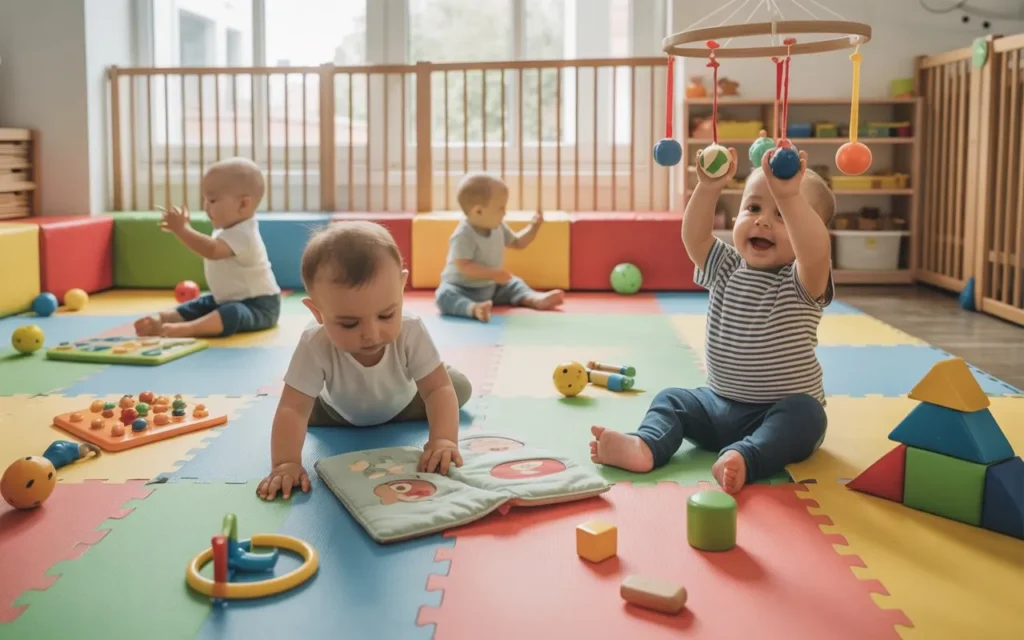
Consider hanging mobiles at appropriate heights where infants can see them during floor play but not grab them. Rotate artwork on walls at infant eye level—yes, that means quite low! Display photographs of faces, images of nature, and colorful patterns.
Natural light is wonderful, but ensure you have ways to control it. Bright afternoon sun can be uncomfortable, and some lighting flexibility supports nap times and creates different moods throughout the day.
Auditory Experiences
Sound plays a crucial role in infant development. Caregivers make sure recorded music is played only once in a while to avoid overwhelming babies. When you do use music, choose varied styles—classical, world music, children’s songs, nature sounds.
Better than recorded music is live singing. Your voice—even if you think you can’t carry a tune—is the most beautiful sound to the infants in your care. Sing during routines, during play, whenever the moment feels right. Songs with repetitive patterns help infants begin to anticipate what comes next, supporting cognitive development.
Include musical instruments that infants can explore: shakers, drums, rain sticks. These items make wonderful infant activities for daycare because they provide immediate auditory feedback when babies move them.
Tactile Opportunities
Touch is perhaps the primary way infants learn about their world. Create abundant opportunities for tactile exploration throughout your space. Beyond dedicated texture boards, think about incorporating varied textures into all areas.
Different types of flooring materials in different zones, fabric wall hangings they can touch, baskets of various materials—all these elements create a tactilely rich environment. Water play under close supervision offers wonderful sensory experiences, as does supervised exploration of safe food items during mealtimes.
Remember that for infants, tactile exploration often means mouthing objects. This is completely normal and developmentally appropriate. Provide items that are safe to mouth and maintain rigorous cleaning schedules.
Creating Calm Spaces
While sensory richness is important, infants also need places where sensory input is reduced. Babies can get overwhelmed easily, so caregivers make sure the lights aren’t too bright, the room isn’t too cluttered.
Your quiet corners should truly be quiet—softer lighting, fewer visual distractions, muted colors. These spaces give infants opportunities to regulate themselves when they feel overstimulated, which is an important emotional skill.
Facilitating Movement and Physical Development
Physical development happens rapidly during infancy, and your environment should support every stage of motor skill development. From strengthening neck muscles during tummy time to taking those first wobbly steps, the space you create either supports or hinders these milestones.
Freedom of Movement
This cannot be emphasized enough: infants need freedom to move. Movement supports children’s growth by allowing them to practice physical skills, develop thinking skills, and practice independence.
Minimize the use of restrictive equipment like bouncers, swings, and activity centers. While these have their place for brief periods, infants should spend most of their awake time on the floor where they can move freely. This is where real development happens—when babies can stretch, reach, roll, and eventually crawl and walk without restrictions.
Ensure your floors are impeccably clean since this is where infants spend so much time. Use non-slip mats that won’t bunch up and create tripping hazards as babies begin cruising and walking.
Supporting Tummy Time
Tummy time is crucial for building the strength infants need for later motor milestones. Make tummy time inviting by creating an interesting landscape for babies to explore while on their bellies.
Place captivating objects slightly out of reach to encourage reaching and stretching. Use mirrors at floor level so babies can see themselves. Vary the toys and materials available during tummy time to maintain interest. Get down on the floor yourself—your face is the most interesting thing to a baby, and your presence makes tummy time more engaging.
Graduated Challenges
As infants develop, they need gentle challenges that encourage the next step in their physical development. Caregivers might put an interesting object just out of reach so that babies learn to coordinate their movements to stretch and grasp the object.
Add safe, low climbing opportunities for mobile infants. Soft foam blocks stacked to create small obstacles, gentle ramps, and sturdy furniture babies can pull themselves up on all provide appropriate physical challenges.
Organizing for Independence and Exploration
Even infants can experience a sense of independence when the environment is organized to support their abilities. When materials are visible and accessible, babies can begin making choices about what interests them.
Low Shelving and Visual Access
Store materials on low, open shelves where infants can see what’s available. Provide low shelves and easy-to-see baskets/containers to hold materials. This visual access helps even pre-verbal infants communicate their interests and preferences.
Rotate materials regularly to maintain interest. You don’t need dozens of toys out at once—in fact, fewer, well-chosen materials often result in deeper engagement. Keep some toys in storage and rotate them weekly or biweekly for renewed interest.
Predictable Organization
While infants are too young to put toys away independently, maintaining consistent organization helps them begin to understand where things belong. It also makes your job easier! Group similar items together—all the balls in one basket, all the blocks in another.
Label everything with both pictures and words. While infants can’t read, this practice benefits older siblings who might visit, supports your own organization, and prepares the environment for as children grow.
Natural Consequences and Safe Exploration
Your environment should allow infants to explore cause and effect safely. What happens when I drop this block? When I push this ball, does it roll? When I shake this rattle, what sound does it make?
Infant activities for daycare work best when they allow babies to discover these relationships independently. Instead of constantly showing infants how things work, step back and let them experiment. Arrange the environment so these experiments are safe and interesting.
Creating Emotional Security Through Environment
Physical safety is paramount, but emotional safety is equally important. The environment should communicate to infants that they are safe, valued, and cared for.
Homelike Elements
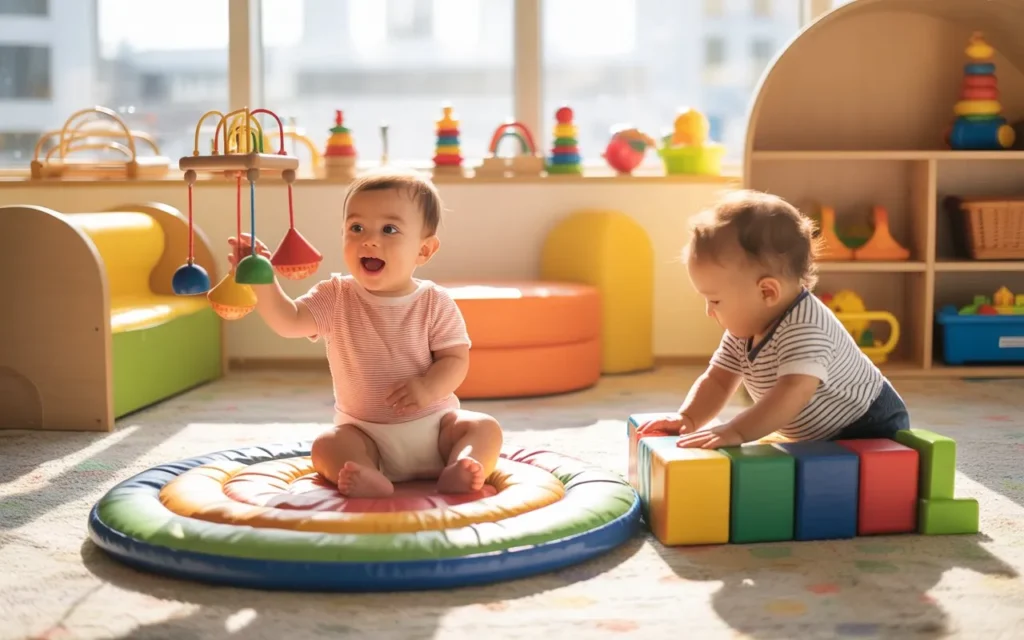
Incorporate elements that make the space feel warm and nurturing rather than institutional. Soft lighting, natural materials, plants (safely out of reach), comfortable seating, and family photographs all contribute to a homelike atmosphere.
Create personalized spaces for each infant—perhaps a cubby with their photo, a place where their comfort item is stored, or a spot where artwork featuring their handprints is displayed. These personal touches help infants feel a sense of belonging.
Supporting Consistent Relationships
The most important element of your infant environment isn’t physical at all—it’s the consistent, caring relationships between infants and caregivers. The curriculum blends structured learning with interactive play, promoting cognitive, social, and physical development.
Arrange furniture so caregivers can maintain visual contact with all infants while being physically close enough for quick responses. Create comfortable spots where caregivers can sit at infant level for face-to-face interaction.
Respecting Individual Rhythms
Not all infants need the same thing at the same time. Your environment should support individual schedules for sleeping, eating, and playing. This means having quiet spaces where one infant can nap while others play, and flexible routines that honor each baby’s unique rhythm.
Maintaining Health and Safety Standards
A truly engaging environment is, first and foremost, a safe environment. Health and safety considerations should underpin every design decision you make.
Separate Zones for Different Functions
Maintain clear separation between play areas and areas for eating, sleeping, and diapering. These zones should be distinctly separate to maintain health standards and prevent cross-contamination.
Your diapering area needs to be near a sink for proper handwashing. Food preparation areas should be completely separate from diapering areas. Sleep areas should be away from active play spaces so nappers aren’t disturbed.
Visibility and Supervision
Arrange furniture and equipment so you can easily supervise all infants at all times. Avoid creating blind spots behind tall furniture or hidden corners. Even during active supervision, your environment should support line-of-sight contact with every child.
Consider the height of shelving and furniture carefully. Low, stable shelves work well for displaying materials while maintaining visibility across the room.
Regular Safety Checks
Make environmental safety checks part of your daily routine. Walk through the space from an infant’s perspective—literally get down on the floor and look around. You might spot hazards you wouldn’t notice from standing height.
Check that outlet covers are secure, furniture is stable, no small objects have been accidentally dropped, and all materials are in good condition. Repair or remove anything that shows wear before it becomes a safety hazard.
Incorporating Family Culture and Community
Your infant environment should reflect the rich diversity of the families you serve. When infants see elements of their home culture in the daycare environment, it supports their sense of identity and belonging.
Cultural Representation
Include books, music, artwork, and materials that reflect the cultures, languages, and family structures of the children in your care. This might mean having bilingual books, displaying artwork from various cultures, or including dolls and figurines that represent different ethnicities.
Talk with families about what’s important to them. What songs do they sing at home? What languages do they speak? What traditions do they practice? Find ways to meaningfully incorporate these elements into your infant space.
Family Connections
Create systems that help families feel connected to their infant’s day even when they’re apart. A photo wall showing recent activities, a daily communication board, or a basket where families can leave notes all help maintain that crucial home-daycare connection.
Set aside space for family information, photographs of families, and resources for parents. When families feel welcomed and informed, infants benefit from the strong partnership between their two most important environments.
Adapting Your Environment Over Time
Remember that infant development happens quickly. The perfect environment for a three-month-old looks quite different from the ideal space for a ten-month-old. Your infant room should be flexible enough to evolve as the children in your care develop.
Responsive Changes
Pay attention to how infants use the space. Are they consistently drawn to certain areas and ignoring others? Are there traffic jams at certain times? Do some zones get no use? Let these observations guide your adjustments.
If you notice multiple infants consistently interested in pulling themselves up, add more safe opportunities for this. When several babies become mobile around the same time, you might need to reduce the number of stationary activity items and increase open floor space.
Seasonal Adjustments
Consider making seasonal changes to maintain interest and provide varied experiences. Different natural materials, seasonal artwork, or themed sensory experiences can refresh the environment without requiring major reorganization.
When possible, extend your environment outdoors. Nature play is important for infants, toddlers, preschoolers, families, staff, and communities. Even young infants benefit from outdoor time—feeling breezes, seeing natural light and shadows, hearing birds and rustling leaves.
Learning from the Infants
Your best teachers about what works in your infant environment are the infants themselves. Watch them carefully. What captures their attention? What do they return to repeatedly? What generates joyful engagement versus frustrated tears?
Use these observations to continuously refine and improve your space. The goal isn’t perfection but rather creating an environment that truly serves the unique group of infants currently in your care.
Bringing It All Together
Creating an engaging play environment for infants is both an art and a science. It requires understanding child development, safety standards, and best practices, but it also demands creativity, observation, and responsiveness to individual children’s needs.
The most effective infant environments share several key characteristics: they prioritize safety while encouraging exploration, they engage multiple senses without overwhelming, they support movement and independence, and they create emotional security through their design and the caring relationships they facilitate.
Remember that you don’t need expensive equipment or extensive resources to create a wonderful infant environment. What matters most is thoughtfulness—being intentional about why each element is included and how it serves the infants in your care. Simple, high-quality materials often prove more engaging than complex commercial products.
Your environment should evolve as you gain experience and as different infants with different needs enter your care. Stay curious, remain flexible, and never stop observing how babies interact with the space you’ve created. They’ll show you what’s working and what needs adjustment.
Your Next Steps Toward an Exceptional Infant Environment
As you consider how to implement these ideas in your own daycare setting, remember that change doesn’t have to happen overnight. Start with one area or one concept that resonates with you. Perhaps you’ll begin by reorganizing your tummy time area, or maybe you’ll focus first on rotating materials to maintain fresh interest.
At Creative Labs Learning Center, we’re passionate about creating environments where every child can thrive. Our team understands that the early months and years lay the foundation for all future learning, and we’ve carefully designed our infant spaces to support this critical development period.
We invite families in the Alpharetta area to experience firsthand how a thoughtfully designed infant environment can make all the difference in your child’s early learning journey. From our safe, engaging play spaces to our nurturing staff who understand infant development, we’ve created a home away from home where your little one can explore, grow, and flourish.
Ready to see the difference a well-designed infant environment can make? Visit us at Creative Labs Learning Center to schedule a tour of our facility. See our infant rooms in action, meet our dedicated staff, and discover why families throughout Alpharetta trust us with their most precious treasures.
Whether you’re currently searching for infant care or simply want to learn more about our approach to early childhood education, we’d love to connect with you. Contact us today to learn about availability, programs, and how we can support your family’s needs. Your baby’s journey of discovery begins with the right environment—let us show you what’s possible when care, expertise, and intentional design come together.
Schedule your visit today and take the first step toward providing your infant with an engaging, nurturing environment where they can reach their fullest potential!
Frequently Asked Questions About Infant Play Environments
What activities should be included in a daycare for babies under 1 year old?
Babies under one year old thrive with activities that support their natural development stages. Focus on plenty of supervised tummy time to build neck and core strength, sensory exploration with safe textures and objects they can mouth, simple cause-and-effect toys like rattles and soft blocks, and most importantly—responsive interaction with caregivers. The best activities are actually the simplest ones: face-to-face communication, gentle songs, peek-a-boo games, and allowing free movement on clean, safe floors. Avoid overstimulating electronic toys and instead provide natural materials, mirrors at floor level, and opportunities for babies to practice reaching, grasping, and eventually crawling. Quality infant care focuses less on structured activities and more on creating an environment where babies can explore at their own pace with attentive caregivers nearby.
How much floor time should infants get at daycare each day?
Infants should spend most of their awake time on the floor—ideally several hours throughout the day broken into shorter periods. Pediatric experts recommend that babies get as much unrestricted floor time as possible because this is when crucial physical development happens. They need freedom to stretch, roll, practice pushing up during tummy time, and eventually crawl and cruise. While equipment like swings or bouncers can be used briefly (15-20 minutes at a time), they shouldn’t replace floor play. A good rule of thumb is that if a baby is awake, alert, and not being fed or changed, they should be on the floor interacting with caregivers and exploring their environment. This floor time directly supports muscle development, spatial awareness, and motor skills that form the foundation for all future physical abilities.
What makes a daycare room safe for crawling babies?
A safe crawling environment starts with impeccably clean, cushioned floors free of small objects that could be choking hazards. All furniture should be stable and secured to walls to prevent tipping when babies pull themselves up. Outlet covers must be in place, cords should be completely out of reach, and there should be no sharp corners or edges within the infant’s space. Gates or barriers should separate the infant area from spaces with older children. The room needs clear sightlines so caregivers can supervise all areas without blind spots. All toys and materials should be checked daily for damage, and anything babies can access should be large enough that it can’t fit through a toilet paper roll (the standard choking hazard test). Additionally, cleaning products and any potentially dangerous items must be stored in locked cabinets well out of reach, and the temperature should be comfortable since babies play on the floor.
How often should toys be rotated in an infant classroom?
Rotating toys every 1-2 weeks works well for most infant classrooms. This keeps the environment fresh and interesting without overwhelming babies with too many choices at once. Rather than having dozens of toys available simultaneously, keep 8-12 carefully selected items out and store the rest. When you rotate, observe which items generate the most engagement and which are ignored—this tells you what’s developmentally appropriate for your current group. Some favorite items can stay out longer, while less popular ones might be stored away for a few weeks before reintroducing them. The goal isn’t constant novelty but rather providing the right level of stimulation. As babies develop new skills, rotate in toys that match their emerging abilities. For example, when several infants start pulling up, introduce more items that support standing and cruising. Pay attention to the babies themselves—they’ll show you when they’re ready for something new or when they’re still deeply engaged with current materials.