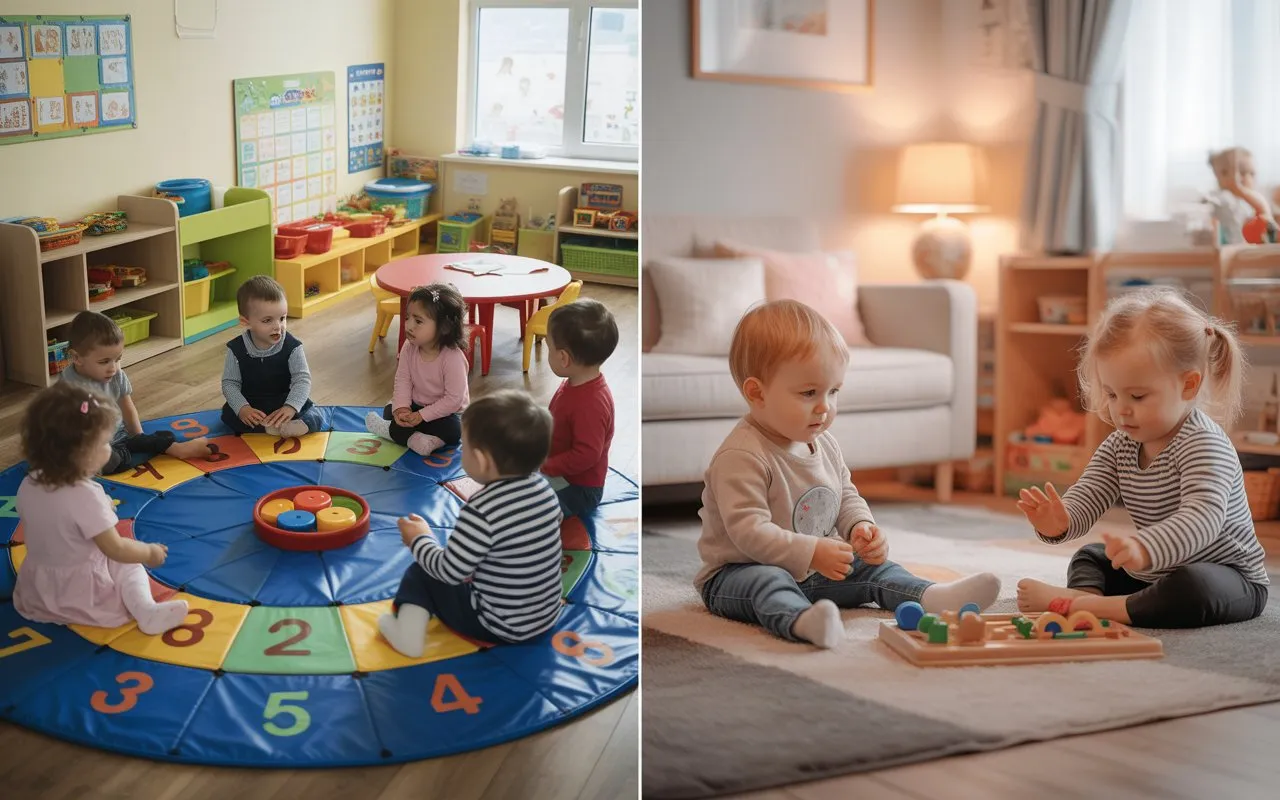
If you’re a parent researching early learning options for your little one, you’ve probably noticed these two terms popping up everywhere: daycare and child care. At first glance, they seem completely interchangeable—just different ways of saying the same thing, right? Well, not exactly. While many people use these words synonymously in everyday conversation, there are some meaningful distinctions that can help you better understand what each term represents and what to look for when choosing the best environment for your child.
The truth is, the language we use around early childhood education has evolved significantly over the years. What started as simple supervision has transformed into a sophisticated field focused on child development, learning, and holistic growth. Understanding the nuances between daycare and child care isn’t just about semantics—it’s about recognizing the value of quality early education and finding a program that aligns with your family’s needs and values.
In this article, we’ll explore the real differences between these terms, what they mean for your child’s experience, and how to navigate the world of early childhood care with confidence. Whether you’re a first-time parent or adding another little one to your family, this guide will help you make informed decisions about your child’s early learning journey.
The Historical Context: Where Did These Terms Come From?
To really understand the daycare vs child care debate, it helps to look back at where these terms originated. The concept of “daycare” emerged in the late 19th century during the Industrial Revolution. As more parents—particularly mothers—entered the workforce in factories and urban centers, there was a pressing need for somewhere safe to leave children during working hours. These early facilities were primarily focused on keeping children safe and supervised while parents worked, rather than providing educational enrichment.
The term “daycare” literally refers to care provided during the day—a straightforward description of a practical service. For decades, this was the standard term used across the industry. However, as research began to reveal the incredible importance of early childhood development and the critical role these formative years play in a child’s lifelong success, the field began to evolve. Educators and care providers started implementing structured curricula, developmental assessments, and age-appropriate learning activities.
This shift in understanding led to a parallel shift in language. Many early childhood education professionals began preferring the term “child care” because it places the emphasis squarely on the child and their developmental needs, rather than simply on the time of day when care is provided. It’s a subtle but meaningful distinction that reflects the growing professionalization of the field and the recognition that quality early childhood programs do so much more than just “watch” children.
Daycare: What Does It Really Mean?
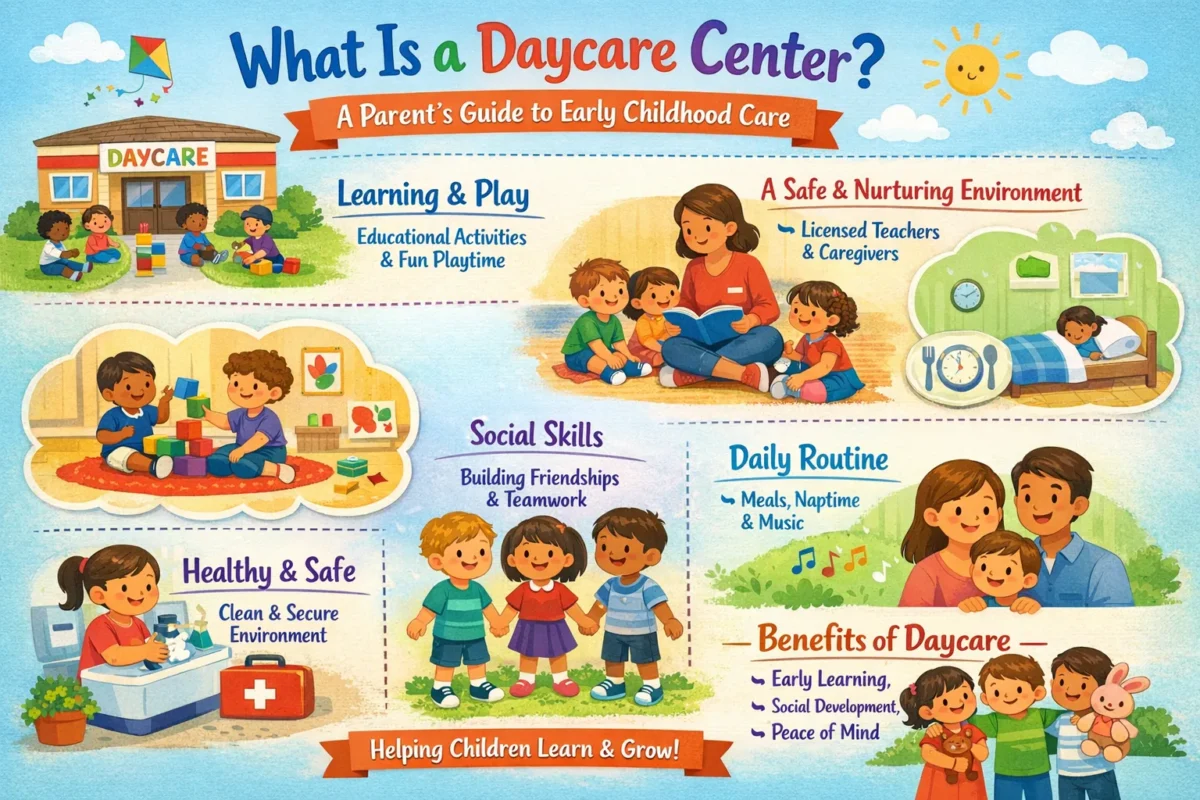
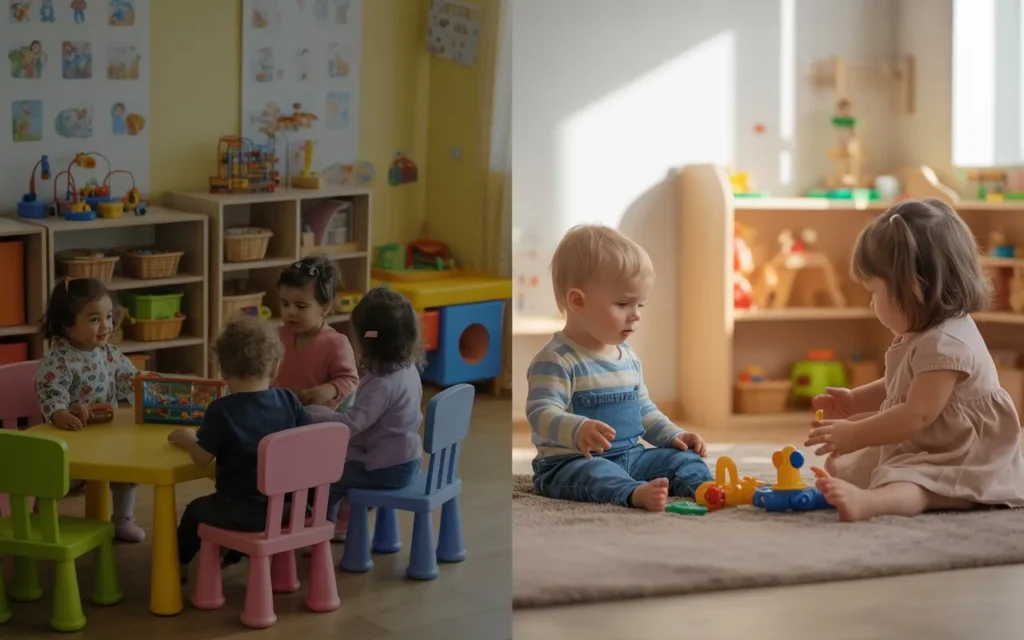
When most people think of daycare, they picture a facility where parents drop off their children while they head to work. And that’s certainly accurate! Daycare typically refers to out-of-home care provided during standard business hours—usually from early morning until early evening—to accommodate parents’ work schedules.
Traditional daycare centers focus primarily on meeting children’s basic needs: keeping them safe, fed, and engaged throughout the day. Many daycare facilities offer play-based activities, outdoor time, nap schedules, and meals or snacks. Some have age-grouped classrooms, while others mix age ranges together. The level of educational programming can vary significantly from one daycare to another.
Here are some common characteristics of traditional daycare:
Structured Daily Routines: Most daycares follow a predictable schedule that includes free play, group activities, meal times, and rest periods. This consistency helps children feel secure and understand what to expect throughout their day.
Supervision and Safety: The primary focus is ensuring children are supervised and safe at all times. State regulations typically mandate specific staff-to-child ratios based on age groups to ensure adequate supervision.
Social Interaction: Children get the opportunity to interact with peers, which helps them develop important social skills like sharing, taking turns, and communicating with others their age.
Convenience for Working Parents: Daycare centers typically operate during standard work hours, making them a practical solution for families with traditional work schedules.
It’s important to note that the term “daycare” doesn’t necessarily mean the quality is lower or that learning isn’t happening. Many excellent facilities use this term simply because it’s what parents are familiar with and actively searching for. However, the terminology does tend to emphasize the custodial aspect—keeping children safe during the day—rather than highlighting the educational and developmental components.
Child Care: A More Comprehensive Approach
Child care is a broader, more inclusive term that encompasses many different types of care arrangements. When we talk about child care, we’re referring to any situation where someone other than the parent is responsible for caring for a child. This could include:
- Licensed child care centers
- Family child care homes (care provided in someone’s residence)
- In-home care by nannies or babysitters
- Care by relatives, friends, or neighbors
- Preschool programs
- Before and after-school programs
One of the key differences is that child care isn’t limited to “daytime” hours. Many child care professionals offer evening, overnight, or weekend care to accommodate parents with non-traditional work schedules—think healthcare workers, first responders, or service industry employees who may work nights or weekends.
But perhaps most importantly, the term “child care” signals a philosophy that puts the child at the center of everything. It emphasizes not just keeping children safe, but nurturing their development across all domains: cognitive, social, emotional, and physical. Quality child care providers see themselves as partners in a child’s growth and education, not just as supervisors filling time until parents return from work.
Modern child care centers often incorporate:
Developmentally Appropriate Curricula: Structured learning experiences designed specifically for each age group, promoting skills in literacy, mathematics, science, and creative expression.
Trained Early Childhood Educators: Many child care centers employ staff with degrees or credentials in early childhood education, child development, or related fields. This professional training helps educators understand developmental milestones and create meaningful learning opportunities.
Whole-Child Development: Quality child care addresses all aspects of a child’s growth—intellectual, social-emotional, physical, and creative. This might include activities that build fine motor skills, encourage problem-solving, foster emotional regulation, and promote healthy physical development.
Family Partnership: Child care centers that embrace this broader philosophy often view parents as essential partners. They provide regular communication about children’s progress, offer resources for parenting support, and create opportunities for family involvement.
Flexibility: Because child care is a more inclusive term, it often reflects more flexible service options that can adapt to diverse family needs.
The Professional Perspective: Why the Language Matters
For those working in early childhood education, the distinction between daycare vs child care is more than just a matter of preference—it’s about professional identity and recognition. Organizations like the National Association for the Education of Young Children (NAEYC) have worked tirelessly to elevate standards in the field and emphasize the critical importance of quality early childhood education.
Many early childhood educators have invested years in education and training. They hold associate’s or bachelor’s degrees, have earned Child Development Associate credentials, and participate in ongoing professional development. For these professionals, the term “daycare” can feel dismissive because it doesn’t capture the complexity and importance of their work. It’s similar to calling a teacher a “babysitter”—technically they do watch children, but that description completely misses the educational mission at the heart of what they do.
The term “child care” honors the dedication and expertise of early childhood professionals. It acknowledges that caring for young children involves understanding developmental stages, creating enriching learning environments, assessing individual needs, and implementing evidence-based practices. It recognizes that what happens during these early years isn’t just supervision—it’s education that lays the foundation for lifelong learning.
That said, most early childhood professionals understand that parents aren’t trying to be disrespectful when they use the term “daycare.” It’s simply the term many people grew up with and are most familiar with. The goal isn’t to police language but rather to gently educate families about the evolving nature of the field and the incredible value of quality early childhood programs.
Daycare vs Child Care: The Key Differences Summarized
While there’s certainly overlap between these terms, here’s a quick summary of how they generally differ:
Focus and Philosophy: Daycare tends to emphasize supervision and care during work hours, while child care highlights developmental needs and educational programming for children of all ages and schedules.
Scope: Daycare usually refers specifically to center-based or family care during daytime hours. Child care is more inclusive, covering various care arrangements at any time of day, including evening, weekend, or overnight options.
Professional Standards: Centers calling themselves “child care” programs often signal a commitment to higher educational standards for staff, structured curricula, and developmental assessments. However, this isn’t universal—there are many excellent “daycares” with highly trained staff and robust programming.
Terminology Evolution: “Daycare” is the older, more traditional term, while “child care” represents the modern understanding of early childhood education as a professional field focused on child development.
Perception: Some parents perceive “child care” as more professional or comprehensive, though in practice, the quality of any program depends on factors far beyond what it’s called—things like staff qualifications, curriculum, safety standards, and family engagement.
When researching options for your child, remember that a name alone doesn’t tell you everything you need to know. Some facilities calling themselves daycares provide exceptional early childhood education, while some marketed as child care centers may fall short in quality. What matters most is looking at the specific offerings, philosophy, and practices of each individual program.
What About Preschool? Where Does That Fit In?
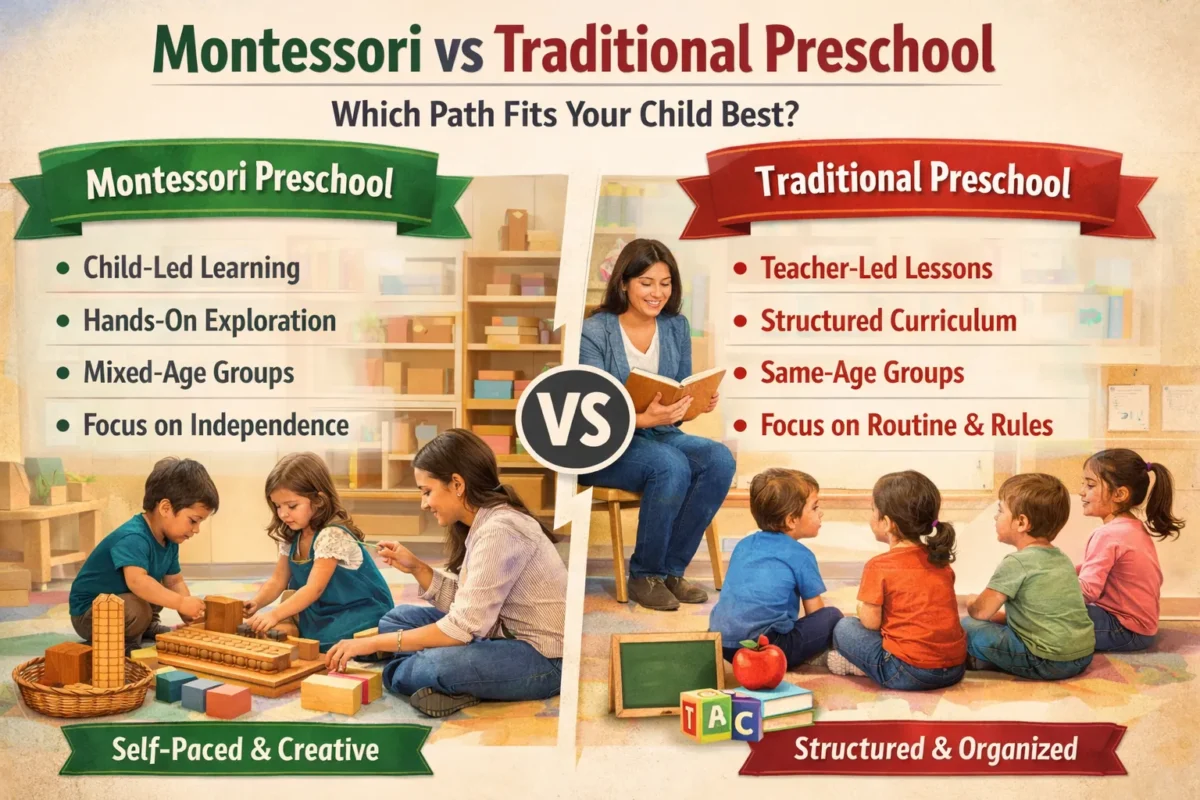
You might also be wondering where preschool fits into the daycare vs child care conversation. Preschool is typically considered a subset of child care that focuses specifically on children ages three to five. Preschool programs often follow a school-year calendar (with summers off) and may operate for just a few hours a day, rather than providing full-day care.
The primary emphasis in preschool is school readiness—preparing children for the academic, social, and emotional demands of kindergarten. Preschool programs typically have more structured educational curricula focused on pre-literacy skills, early math concepts, science exploration, and social-emotional development.
Many child care centers incorporate preschool programs within their offerings, providing both full-day care and an age-appropriate educational curriculum for preschool-aged children. This hybrid approach meets parents’ needs for full-day care while also providing the educational benefits of a preschool program.
Finding the Right Fit for Your Family
Now that you understand the distinctions between these terms, how do you actually choose the right program for your child? Here are some important factors to consider:
Visit Multiple Programs: Nothing replaces seeing a facility in person. Schedule tours at several locations, observe the interactions between staff and children, and get a feel for the environment. Does it feel warm and welcoming? Are children engaged and happy?
Ask About Curriculum: Inquire about whether the program follows a specific curriculum or educational philosophy. How do they promote learning? What does a typical day look like for your child’s age group?
Check Staff Qualifications: Ask about the education and training requirements for teachers and caregivers. Do staff members hold degrees or credentials in early childhood education? What kind of ongoing professional development do they receive?
Understand the Ratios: Lower staff-to-child ratios generally mean more individualized attention. Check your state’s requirements and see if the program meets or exceeds those standards.
Review Safety and Licensing: Ensure the facility is properly licensed and meets all state health and safety requirements. Ask about safety protocols, emergency procedures, and how they handle illness or accidents.
Consider Communication: How does the program keep parents informed? Do they offer daily reports, regular conferences, or digital updates? Strong family-program partnerships benefit everyone.
Trust Your Instincts: Beyond all the practical considerations, pay attention to how you feel about a program. Do you feel comfortable leaving your child there? Does the staff seem genuinely caring and engaged?
Remember, the best program for your family is one that aligns with your values, meets your practical needs, and provides a nurturing, stimulating environment where your child can thrive.
The Role of Quality in Early Childhood Education
Regardless of whether a program calls itself daycare or child care, quality is what truly matters. High-quality early childhood programs share several common characteristics:
Responsive Caregiving: Adults respond promptly and appropriately to children’s needs, creating secure attachments that help children feel safe and valued.
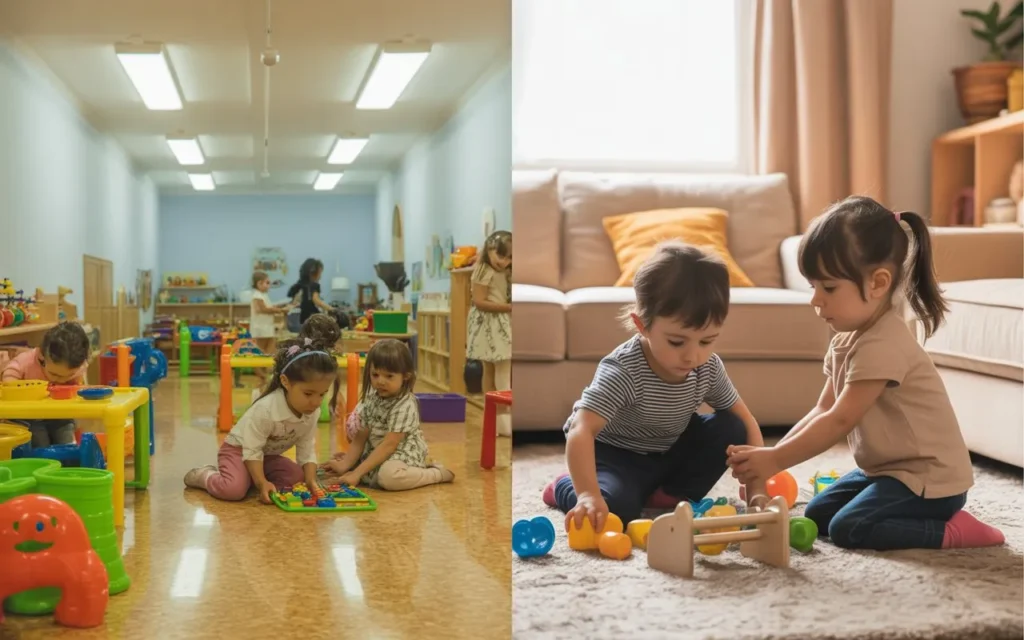
Enriching Environments: Spaces are thoughtfully designed with age-appropriate materials that encourage exploration, creativity, and learning through play.
Intentional Teaching: Educators plan activities and experiences that promote development across all domains, while also following children’s interests and responding to teachable moments.
Positive Relationships: Strong, trusting relationships between children and caregivers form the foundation for healthy development and learning.
Family Engagement: Quality programs recognize parents as children’s first and most important teachers and work collaboratively with families.
Research consistently shows that high-quality early childhood programs have lasting positive effects on children’s academic achievement, social skills, and even long-term life outcomes. The early years are a critical window for brain development, and the experiences children have during this time literally shape the architecture of their developing brains.
This is why the shift from viewing these programs as mere “daycare” to recognizing them as vital early childhood education is so important. It’s not just about semantics—it’s about elevating the entire field and ensuring every child has access to quality learning experiences during these crucial early years.
Making Early Childhood Education Accessible
One challenge facing many families is the cost and availability of quality early childhood programs. Whether you’re looking at daycare or child care options, finding affordable, high-quality care can be difficult in many communities. This is an ongoing challenge that requires attention at the policy level, but there are resources available to help families:
- State and federal subsidies for eligible families
- Employer-sponsored child care benefits
- Sliding scale fees at some centers
- Tax credits for child care expenses
- Community-based programs through schools, churches, or nonprofit organizations
Don’t hesitate to ask programs about financial assistance options or payment plans. Many centers want to serve diverse families and may have flexibility you’re not aware of unless you ask.
At Creative Labs Learning Center: Our Approach to Child Care
At Creative Labs Learning Center, we embrace the comprehensive philosophy that “child care” represents. While many families in our community search for “daycare in Alpharetta,” we see ourselves as so much more than a place where parents drop off their children during work hours.
Our curriculum blends structured learning with interactive play, promoting cognitive, social, and physical development at every stage. We believe that children learn best through hands-on experiences, exploration, and play-based activities that spark curiosity and imagination. Our educators are passionate professionals dedicated to creating a nurturing environment where each child feels valued and supported.
We also understand that parenting doesn’t stop when you drop off your child in the morning. That’s why we keep parents informed about their child’s progress with regular updates, creating a true partnership between home and our center. We’re not just caring for your child during the day—we’re investing in their future and supporting your family every step of the way.
The Bottom Line: It’s About Your Child’s Experience
So, what’s the difference between daycare and child care? At the most basic level, “daycare” typically refers to daytime supervision while parents work, while “child care” represents a more comprehensive, developmentally focused approach that encompasses a wider range of care arrangements and philosophies. But in practice, these distinctions aren’t always clear-cut, and individual programs vary widely regardless of what they call themselves.
What really matters isn’t the terminology—it’s the quality of care and education your child receives. Whether a program calls itself a daycare, child care center, early learning center, or something else entirely, focus on finding a place where:
- Your child feels safe, loved, and excited to learn
- Educators are qualified, caring, and committed to child development
- The environment is enriching and age-appropriate
- You feel respected as a partner in your child’s education
- The program’s philosophy aligns with your family’s values
The daycare vs child care conversation reflects the evolution of a field that has grown tremendously in professionalism and importance. As we continue to understand more about early childhood development and the lasting impact of these formative years, the language we use matters because it signals respect for the vital work being done and the crucial role these programs play in children’s lives.
Ready to Explore Your Options?
Choosing the right early childhood program is one of the most important decisions you’ll make as a parent. We encourage you to visit several programs, ask lots of questions, and trust your instincts about what feels right for your family.
If you’re in the Alpharetta area and looking for a child care program that combines nurturing care with educational excellence, we’d love to meet you and your little one. At Creative Labs Learning Center, we’re passionate about providing children with enriching experiences that build the foundation for lifelong learning and success.
Visit us today to see our classrooms in action and learn more about our programs! Contact DayCare Alpharetta to schedule a tour or learn more about enrollment. We’re here to support your family and help your child thrive during these precious early years.
Your child’s future begins with the right start—and we’re here to help make that happen.
Frequently Asked Questions
Is daycare the same as child care?
Not exactly, though many people use these terms interchangeably. Daycare traditionally refers to supervised care provided during daytime work hours, focusing primarily on keeping children safe while parents are away. Child care is a broader term that encompasses all types of care arrangements—including evening care, in-home care, preschool programs, and center-based care—with an emphasis on children’s developmental and educational needs. The key difference is that child care reflects a more comprehensive approach to early childhood education, while daycare focuses more on the custodial aspect. However, in practice, many excellent programs use either term and what truly matters is the quality of care and education your child receives.
Should I choose a daycare or a child care center for my toddler?
Focus less on what the facility calls itself and more on what it actually offers. Look for a program—whether labeled as daycare or child care—that provides age-appropriate learning activities, qualified staff with early childhood education training, low child-to-teacher ratios, and strong parent communication. Visit several centers, observe how caregivers interact with children, and ask about their curriculum and daily routines. The best choice for your toddler is a nurturing environment where educators understand developmental milestones and create engaging experiences that promote growth across all areas—cognitive, social, emotional, and physical. Trust your instincts about where your child will feel safe, loved, and excited to learn.
What should I look for when touring a daycare or child care facility?
When visiting potential programs, observe the overall atmosphere first—are children happy and engaged? Then check these essentials: staff qualifications and training in early childhood education, current state licensing and safety protocols, appropriate child-to-teacher ratios for each age group, clean and well-maintained indoor and outdoor spaces, and age-appropriate toys and learning materials. Ask specific questions about daily schedules, curriculum approach, how they handle discipline and behavioral guidance, their communication methods with parents, and their policies on illness and emergencies. Pay attention to how teachers interact with children—do they get down to the children’s level, speak warmly, and respond promptly to needs? Trust your gut feeling about whether this feels like a place where your child will thrive.
How much does quality child care or daycare typically cost?
Child care costs vary significantly based on your location, the child’s age, and whether you choose full-time or part-time care. Nationally, full-time infant care at a center typically ranges from $800 to $1,500+ per month, with costs generally decreasing as children get older. Urban areas and regions with higher costs of living tend to have higher rates. While quality care represents a significant investment, remember that you’re not just paying for supervision—you’re investing in your child’s development during critical early years. Many families qualify for subsidies, tax credits, or employer-sponsored benefits that can help offset costs. Don’t hesitate to ask centers about sliding scale fees, payment plans, or financial assistance options. Some programs offer sibling discounts or reduced rates for part-time schedules that might fit your budget better.