Choosing the right care for your child ranks among the most important decisions you will make as a parent. A daycare center provides structured early childhood education and supervision in a safe environment while you work or manage other responsibilities. Understanding what these facilities offer helps you make informed choices about your child’s development and well-being.
This guide walks you through everything you need to know about daycare centers. You will discover the types of programs available, what makes quality care, and how to select the best option for your family. Let’s explore the world of early childhood care together.
Understanding Daycare Centers and Their Purpose
A daycare center serves as a licensed facility where trained professionals care for children during daytime hours. These centers operate in dedicated buildings designed specifically for child care and early education. Parents use these services when they need reliable supervision and developmental support for their children.
The Core Functions of Modern Daycare
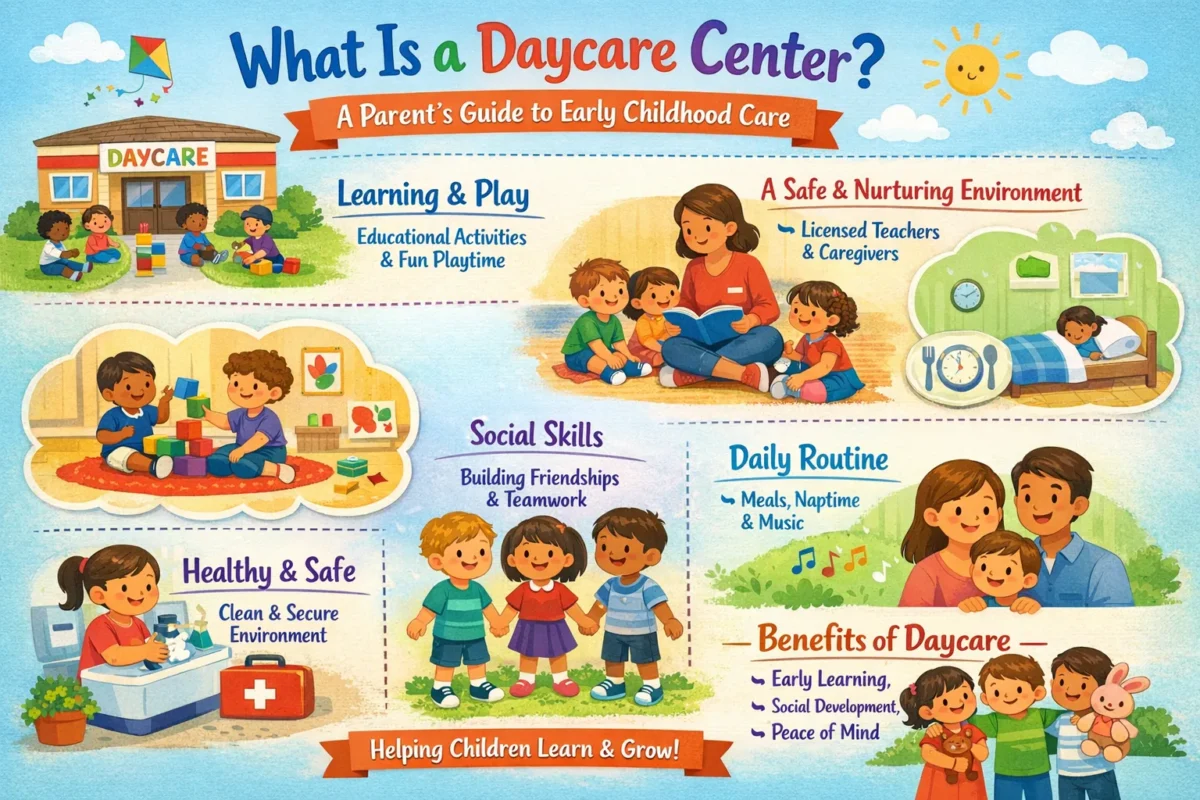
Today’s daycare centers do much more than watch children. They create structured learning environments that promote cognitive, social, and emotional growth. Staff members plan age-appropriate activities that build foundational skills through play and exploration.
Centers typically organize children into groups based on age ranges. Infants receive individualized attention for feeding and sleeping routines. Toddlers engage in sensory activities that develop motor skills. Preschoolers participate in pre-literacy programs and cooperative play that prepares them for kindergarten.
How Daycare Differs from Other Child Care Options
Parents often wonder how daycare centers compare to other care arrangements. Unlike home-based child care, centers employ multiple staff members and maintain commercial facilities. This structure provides built-in backup coverage when caregivers are sick or unavailable.
Centers also differ from nannies or family members who care for children at home. The group setting exposes children to peers, which builds social skills and prepares them for school environments. Licensed centers must meet state regulations for safety, staff qualifications, and curriculum standards.
👉 Also Read : 10 Easy Spring Art Activities for Toddlers in Daycare
Types of Daycare Centers Available
Traditional Full-Time Programs
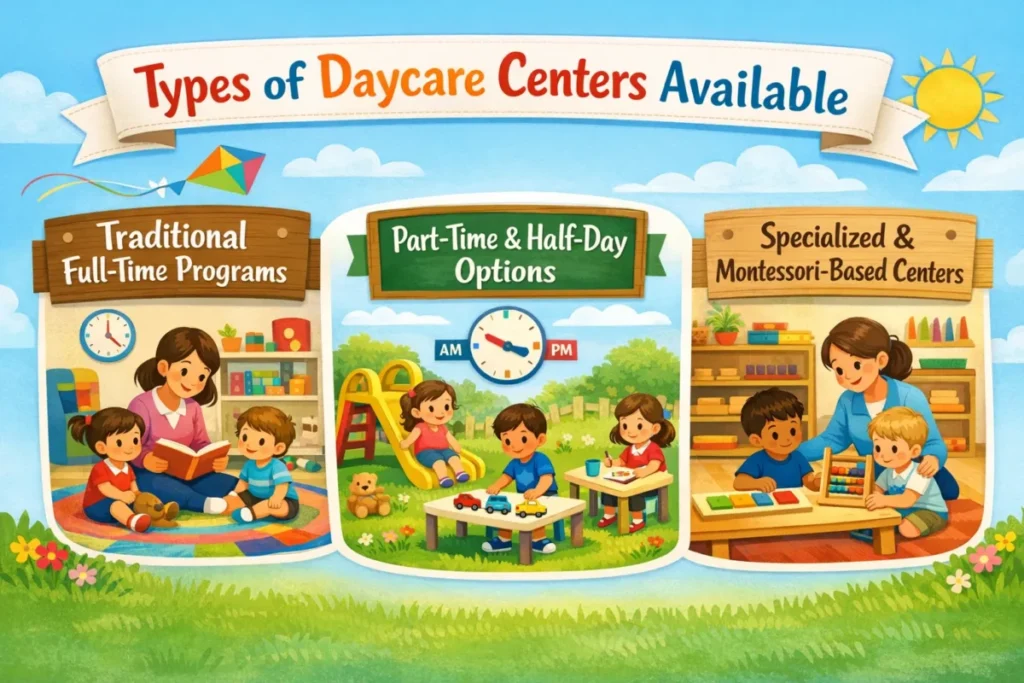
Full-time daycare centers operate during standard business hours, typically from 7 AM to 6 PM on weekdays. These programs serve working parents who need consistent, all-day care. Children attend five days per week and follow a regular schedule that includes meals, naps, and structured activities.
Many centers offer flexibility with drop-off and pickup times within their operating hours. This arrangement works well for parents with traditional work schedules who need dependable care throughout the year.
Part-Time and Half-Day Options
Some centers provide part-time enrollment for families who need fewer hours of care. Half-day programs run for either morning or afternoon sessions, usually three to four hours long. Parents who work part-time, attend school, or share care responsibilities with partners often choose these options.
Part-time arrangements cost less than full-time care while still giving children access to structured learning and social interaction. These programs work particularly well for preschool-aged children who benefit from shorter, focused sessions.
Specialized and Montessori-Based Centers
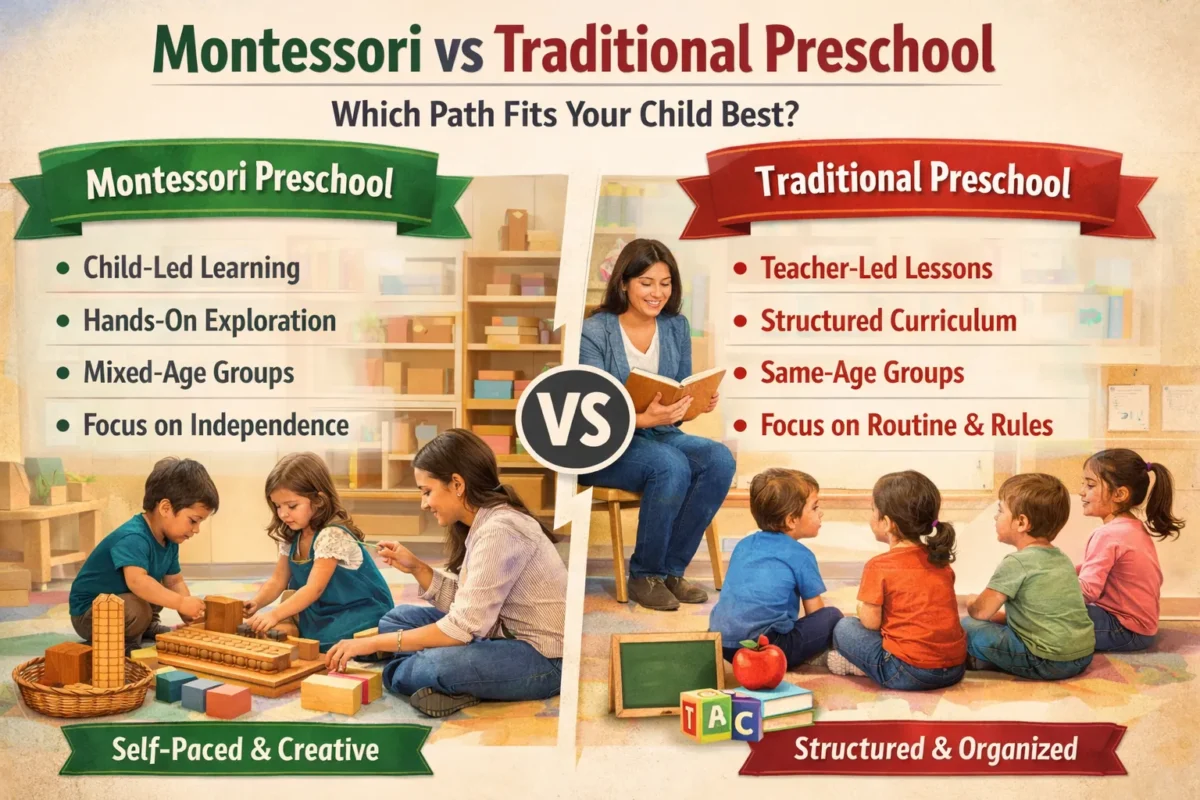
Certain daycare centers follow specific educational philosophies or methodologies. Montessori programs emphasize self-directed learning and hands-on activities with specialized materials. Children work at their own pace and choose activities that interest them within a prepared environment.
Other specialized centers focus on language immersion, STEM education, or arts-based curricula. These programs appeal to parents who want specific educational approaches aligned with their values and goals for their children.
👉 Also Read : Do Kids Have To Go To Preschool?
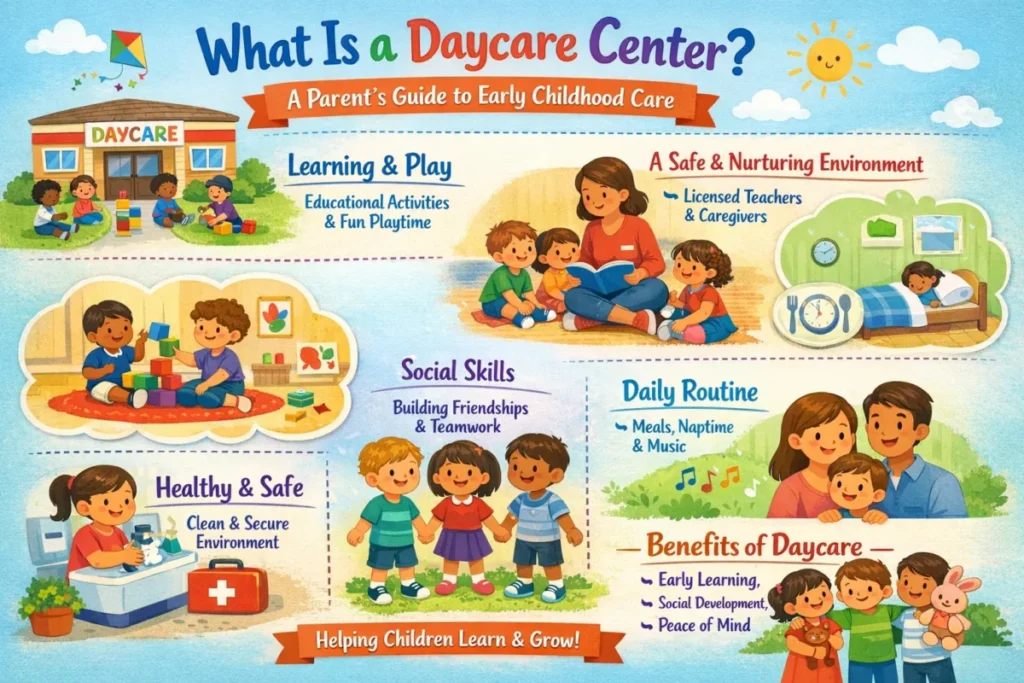
Key Benefits of Daycare Center Enrollment
Social and Emotional Development
Children in daycare settings interact with peers daily, which accelerates social skill development. They learn to share, take turns, and resolve conflicts with guidance from trained educators. These early experiences build emotional intelligence and help children understand social cues.
Group activities teach cooperation and teamwork. Children discover how to communicate their needs, express emotions appropriately, and develop empathy for others. Research from the National Institute of Child Health and Human Development shows that quality child care programs support positive social development (https://www.nichd.nih.gov).
Structured Learning and Cognitive Growth
Quality daycare centers implement curricula designed to stimulate cognitive development. Children engage in activities that build language skills, mathematical thinking, and problem-solving abilities. Story time, counting games, and puzzles strengthen neural connections during critical early years.
Educators introduce concepts through play-based learning that feels natural and engaging. This approach helps children develop curiosity and a love for learning that carries into their school years. The structured routine also teaches time management and prepares children for classroom expectations.
Preparation for School Success
Children who attend quality daycare programs often show better school readiness than those without formal early education. They arrive at kindergarten familiar with classroom routines, following directions, and working independently. This foundation reduces anxiety and helps children adjust to school environments more quickly.
Centers expose children to early literacy and numeracy concepts that align with kindergarten standards. Children practice holding pencils, recognizing letters, and counting objects. These pre-academic skills give them confidence as they transition to formal schooling.
Support for Working Parents
Daycare centers provide reliable care that allows parents to maintain employment and pursue careers. Knowing your child is safe and engaged in meaningful activities reduces stress and helps parents focus at work. Many employers recognize this benefit and offer child care assistance programs.
Centers also create communities where parents connect with other families facing similar challenges. This network provides emotional support and practical advice. Parent-teacher conferences and regular updates keep families informed about their children’s progress and daily experiences.
👉 Also Read : Why After School Daycare Is the Solution Busy Parents Need
What to Look for in a Quality Daycare Center
Licensing and Accreditation Standards
Every state requires daycare centers to obtain licenses that verify they meet basic health and safety standards. Licensed facilities undergo regular inspections that check building safety, staff qualifications, and program quality. Always verify that any center you consider holds current state licensing.
Accreditation from organizations like the National Association for the Education of Young Children represents a higher standard of quality. Accredited programs voluntarily meet enhanced criteria for curriculum, staff training, and family engagement. These centers demonstrate commitment to excellence beyond minimum requirements.
Staff Qualifications and Ratios
Qualified educators make the biggest difference in program quality. Look for centers that employ staff with degrees or certifications in early childhood education. Experienced teachers understand child development and can create appropriate learning opportunities for different age groups.
Staff-to-child ratios directly impact the attention your child receives. Smaller ratios allow teachers to respond quickly to individual needs and provide personalized support. The American Academy of Pediatrics recommends specific ratios based on age: one teacher for every three to four infants, one for every four to six toddlers, and one for every eight to ten preschoolers (https://www.aap.org).
Safe and Stimulating Environments
Tour any facility before enrolling your child. The physical space should feel clean, organized, and welcoming. Check that play areas are age-appropriate and maintained in good condition. Outdoor spaces should offer opportunities for active play with safe, well-maintained equipment.
Look for environments rich with learning materials. Quality centers provide diverse toys, books, art supplies, and educational resources. The space should include quiet areas for rest and active zones for movement and play.
Communication and Parent Involvement
Strong programs maintain open communication between staff and families. Ask how centers share information about your child’s day, developmental milestones, and any concerns. Many facilities use apps or daily reports that keep parents connected even while at work.
Quality centers welcome parent involvement and create opportunities for families to participate. They may offer volunteer opportunities, parent education workshops, or family events. This partnership approach ensures everyone works together to support your child’s growth.
Understanding Daycare Costs and Financial Assistance
Average Costs Across Different Regions
Daycare center fees vary significantly based on location, program type, and child age. Urban areas typically charge more than rural communities. Infant care costs more than preschool programs because smaller ratios require more staff per child.
Parents should budget between $200 and $400 per week for full-time care in most areas, though costs can exceed $500 weekly in expensive metropolitan regions. Part-time programs reduce costs proportionally. Always request detailed fee schedules that include registration, supplies, and any additional charges.
Available Financial Support Options
Many families qualify for assistance that makes daycare more affordable. The Child Care and Development Fund provides federal support to eligible low-income families. State programs may offer additional subsidies or tax credits for child care expenses.
Employers increasingly offer dependent care flexible spending accounts that let parents pay for care with pre-tax dollars. Some companies provide direct child care subsidies or on-site facilities. Check with your human resources department about available benefits that can offset costs.
Making the Transition to Daycare Easier
Preparing Your Child for the First Day
Start discussing daycare several weeks before your child begins attending. Read books about starting school and role-play arrival and pickup routines. Visit the center together so your child becomes familiar with the environment and meets teachers before the official start date.
Establish consistent morning routines at home that mirror the daycare schedule. Practice the goodbye routine you will use at drop-off. Keep these moments brief and positive. Your calm confidence helps your child feel secure about the new experience.
Managing Separation Anxiety
Most children experience some distress during initial separations. This reaction is normal and typically decreases within a few weeks. Maintain cheerful goodbyes even if your child cries. Staff members are experienced in comforting upset children and helping them engage in activities.
Create a goodbye ritual that provides consistency and closure. This might include a special hug, a wave at the window, or a phrase you always say. Avoid sneaking away, which can increase anxiety. Your child needs to trust that you will return as promised.
Building Positive Relationships with Caregivers
Develop friendly, professional relationships with your child’s teachers. Share information about your child’s personality, preferences, and any special needs. This partnership helps educators provide individualized care that honors your parenting approach and family values.
Maintain regular communication through daily check-ins, notes, or digital updates. Attend parent-teacher conferences and center events when possible. Strong home-center connections support your child’s adjustment and ongoing success in the program.
Common Concerns Parents Face
Health and Illness Policies
Children in group care encounter more germs and may experience frequent minor illnesses initially. Most centers follow strict sick-child policies that require parents to keep home children with fevers, vomiting, or contagious conditions. These policies protect all children and staff.
Ask about the center’s health protocols, including handwashing procedures, cleaning schedules, and medication administration policies. Quality programs follow state health guidelines and work to minimize illness transmission while recognizing that some exposure is inevitable and even beneficial for immune system development.
Behavioral Development and Discipline
Parents sometimes worry about how centers handle challenging behaviors. Reputable programs use positive guidance techniques that teach appropriate behavior rather than punishing mistakes. Teachers redirect negative actions, help children identify emotions, and provide language for resolving conflicts.
Centers should have clear discipline policies that prohibit physical punishment, harsh criticism, or isolation. Ask how staff address biting, hitting, or other common toddler behaviors. Consistent approaches between home and center help children learn expectations and develop self-regulation skills.
Ensuring Individual Attention
While group settings provide valuable social experiences, parents naturally want their child to receive adequate individual attention. Quality centers maintain appropriate ratios and train staff to observe and respond to each child’s unique needs throughout the day.
Teachers in strong programs know each child’s developmental level and personality. They modify activities to challenge advanced learners and support those who need extra help. Regular assessments track individual progress and inform personalized learning plans.
Frequently Asked Questions
What age should my child start daycare?
Most centers accept infants as young as six weeks old, though many parents wait until three to six months. The right age depends on your family situation, work requirements, and personal preferences. Quality infant programs provide nurturing care that supports healthy attachment and development regardless of start age.
How do I know if a daycare center is safe?
Visit the facility during operating hours and observe staff interactions with children. Check for current state licensing, secure entry systems, and clean, well-maintained spaces. Ask about staff background checks, emergency procedures, and safety training. Trust your instincts about the overall environment and how staff treat children.
What should I pack for my child each day?
Most centers require extra clothing, diapers or pull-ups if needed, and comfort items like blankets or stuffed animals. Some provide meals while others ask families to send lunch and snacks. Label everything with your child’s name. Centers typically provide a specific list of required items during enrollment.
Can I visit my child during the day?
Policies vary by center, but many welcome parent visits during operating hours. Some programs have observation windows or cameras that let parents check in remotely. Frequent unannounced visits during the adjustment period can sometimes prolong separation anxiety, so discuss the best approach with your child’s teachers.
Conclusion: Making the Best Choice for Your Family
Selecting a daycare center represents a significant decision that impacts your entire family. Quality early childhood programs provide safe environments where children develop social skills, build cognitive abilities, and prepare for future academic success. The right center becomes a true partner in raising your child during these formative years.
Take time to research options in your area and visit multiple facilities before deciding. Trust your observations and instincts about which environment feels right for your child and family. Remember that adjustment takes time, and challenges during the first weeks are normal. With patience and communication, most children thrive in quality daycare settings.
Your investment in early childhood care pays dividends throughout your child’s life. Children who attend quality programs show long-term benefits in school achievement, social competence, and overall well-being. The relationships your child builds and the experiences they have will shape their development in meaningful ways.