Spring brings sunshine, blooming flowers, and fresh opportunities for creative exploration. Toddlers in daycare settings thrive when they engage with hands-on art projects that celebrate the season while building essential developmental skills.
This guide shares ten simple spring art activities designed specifically for young children. Each project uses accessible materials, encourages sensory exploration, and creates joyful learning moments that connect little ones with the world around them.
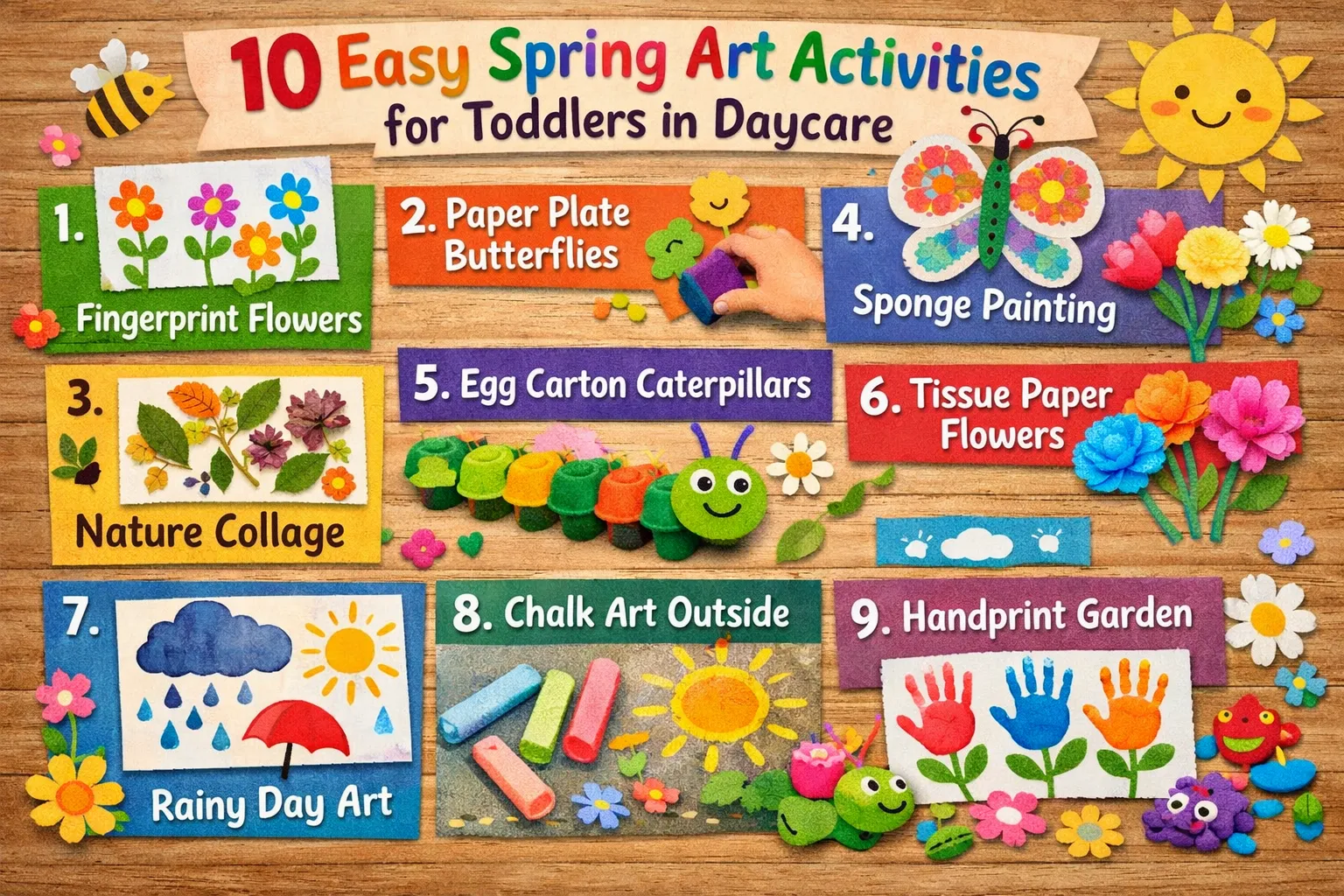
1. Coffee Filter Butterfly Wings
Transform ordinary coffee filters into vibrant butterfly creations that flutter with color and imagination.
Give each child a flat coffee filter and washable markers. Let them color bold patterns across the entire surface. Then spray the filter lightly with water from a spray bottle and watch the colors blend and bleed together like magic.
Once dry, pinch the center and secure it with a clothespin to form butterfly wings. Children can decorate the clothespin body with googly eyes and pipe cleaner antennae. This activity strengthens fine motor skills while teaching color mixing concepts.
Display the finished butterflies on windows or hang them from the ceiling to create a cheerful spring atmosphere throughout your classroom.
Also Read : Do Kids Have To Go To Preschool?
2. Paper Plate Flower Garden
Paper plates become the foundation for a blooming garden that toddlers design with their own creative vision.
Provide paper plates, washable paint, and cotton swabs or small sponges. Children dip their tools into bright spring colors like pink, yellow, purple, and orange, then dab paint around the plate edges to form petals. The circular center becomes the flower middle.
Cut green construction paper into stem and leaf shapes. Let children glue these pieces onto a larger sheet of blue paper, then attach their painted plate flower on top. Some educators add real pressed flowers or leaves for texture exploration.
This project teaches spatial awareness and helps toddlers understand how individual parts combine to create a complete picture.
3. Egg Carton Caterpillars
Recycled egg cartons transform into adorable crawling caterpillars with personality and charm.
Cut egg cartons into strips of four or five cups. Children paint each section in rainbow colors or stick to one vibrant shade. While paint dries, prepare pipe cleaners for antennae and gather googly eyes.
Once dry, help toddlers glue eyes onto the front section and poke pipe cleaners through the top for antennae. Some children enjoy adding pom-poms or stickers as decorative elements. These caterpillars can march across bulletin boards or take imaginary journeys through block centers.
The three-dimensional aspect of this craft helps young children develop spatial reasoning skills while celebrating the creatures they might spot outdoors during spring nature walks.
4. Handprint Spring Trees
Handprints capture a moment in time while creating beautiful seasonal artwork that families treasure for years.
Paint each child’s palm and fingers with brown washable paint. Press their hand firmly onto white or light blue cardstock to create a tree trunk and branches. Fingers become the reaching limbs.
After the brown paint dries, provide pink, white, or light green paint with cotton swabs. Children dab the swabs repeatedly above the branches to form blossoms or new leaves. Some educators add real flower petals or tissue paper pieces for additional texture.
This activity creates a keepsake that shows how much little hands have grown. Parents love receiving these personalized pieces of art that commemorate their child’s development during the spring season.
5. Rainbow Rain Cloud Collages
Clouds and rainbows combine in this cheerful project that explores weather concepts through creative expression.
Give children blue construction paper as their background. They tear or cut white paper into cloud shapes and glue them near the top of their page. Cotton balls stretched and fluffed add dimension to the clouds.
Cut streamers or ribbon into varying lengths in rainbow colors. Children glue these underneath their clouds to represent falling rain. Some toddlers arrange colors in rainbow order while others prefer random patterns that express their unique artistic voice.
This activity naturally leads to conversations about spring showers, weather changes, and how rain helps flowers grow. The tearing and gluing actions strengthen hand muscles needed for future writing skills.
6. Nature Collage Gathering Walk
Combine outdoor exploration with artistic creation by gathering natural materials during a spring walk.
Take your group outside with small bags or baskets. Guide them to collect fallen flower petals, interesting leaves, small twigs, grass, and other natural treasures. Remind children to only gather items already on the ground.
Back inside, provide cardstock or cardboard bases with glue sticks. Toddlers arrange their collected items into patterns or pictures, gluing each piece down. The variety of textures, colors, and shapes makes each collage completely unique.
This sensory-rich experience connects children with nature while teaching classification and sorting skills.
7. Bubble Wrap Beehive Printing
Bubble wrap creates fascinating textures that toddlers find endlessly entertaining to explore.
Cut bubble wrap into small squares or rectangles. Tape the pieces securely onto wooden blocks or fold them to create hand-held stamps. Pour yellow and orange paint onto paper plates.
Children dip their bubble wrap stamps into paint and press them onto paper to create honeycomb patterns. The bubbles leave circular imprints that resemble beehive structures. Some educators cut out beehive shapes from yellow paper first, then children stamp patterns directly onto these forms.
Add small bee cutouts or let children draw bees with black and yellow markers. This activity introduces children to important pollinators while providing satisfying tactile feedback through the stamping process.
8. Torn Paper Spring Landscape
Ripping paper offers toddlers a safe way to build hand strength while creating beautiful layered artwork.
Provide construction paper in spring colors like green, blue, yellow, pink, and white. Demonstrate how to tear paper into strips and irregular shapes. Children rip multiple colors and begin arranging them on a background sheet.
The bottom becomes green grass, the middle holds colorful flowers or trees, and the top shows blue sky with white clouds. Children glue their torn pieces down in layers. This process feels liberating because there are no mistakes, only creative choices.
Torn paper edges create interesting organic textures that differ from cut edges. This project teaches composition and spatial relationships while allowing complete creative freedom.
9. Stamped Flower Bouquets
Everyday objects become creative tools when toddlers discover their printing potential.
Gather various items for stamping like celery bottoms, cut potatoes, sponges, corks, or plastic bottle caps. Pour spring-colored paints into shallow dishes. Show children how different objects create unique patterns when dipped in paint and pressed onto paper.
Celery bottoms create beautiful rose-like shapes. Bottle caps make perfect circular flowers. Cork ends produce small dots ideal for flower centers. Children experiment with combinations to build their own spring bouquet.
Draw or glue green stems onto the paper before or after stamping. This activity teaches cause and effect while encouraging experimentation and discovery.
10. Tissue Paper Stained Glass Flowers
Create luminous window decorations that catch sunlight and fill your space with color.
Cut contact paper into large squares and peel off the backing. Tape the sticky side up onto tables, securing corners firmly. Provide torn tissue paper pieces in spring flower colors.
Children press tissue paper onto the sticky surface in any pattern they choose. Some create realistic flower shapes while others prefer abstract color combinations. When satisfied, place another sheet of contact paper on top, sticky side down, to seal the artwork.
Trim edges and hang these creations in windows where sunlight transforms them into glowing displays. The translucent nature of tissue paper creates a stained glass effect that captivates both children and visitors.
These pieces remain beautiful for weeks and serve as daily reminders of creative accomplishments.
Also Read : Why After School Daycare Is the Solution Busy Parents Need
Materials to Keep on Hand
Stock your art area with these versatile supplies that support endless spring creativity.
Essential items include washable paints in multiple colors, construction paper, cardstock, glue sticks, child-safe scissors, markers, and crayons. Gather natural materials like flowers, leaves, and twigs when seasonally appropriate.
Recycled materials offer incredible creative potential. Save egg cartons, paper plates, cardboard tubes, bottle caps, and bubble wrap. These items transform into art supplies while teaching environmental awareness.
Sensory materials like cotton balls, tissue paper, streamers, pipe cleaners, and pom-poms add texture and dimension to projects.
Setting Up for Success
Create an environment where toddlers explore art safely and confidently.
Cover tables with washable tablecloths or newspaper. Provide smocks or old t-shirts to protect clothing. Keep wet wipes and paper towels within reach for quick cleanups.
Demonstrate each activity briefly but allow children to interpret projects in their own way. The process matters more than the finished product. Some children finish quickly while others need extended time to explore materials fully.
Display completed artwork at child height where toddlers can admire their creations with pride. Rotate displays regularly to showcase different students and projects throughout the spring season.
Benefits Beyond the Brushstrokes
Spring art activities deliver developmental advantages that extend far beyond creating pretty pictures.
Fine motor skills strengthen as children tear, cut, glue, paint, and manipulate various materials. Hand-eye coordination improves through precise movements required for stamping, dotting, and placing items.
Creative expression flourishes when children make independent choices about colors, patterns, and compositions. This autonomy builds confidence and decision-making abilities that serve them throughout life.
Social skills develop as toddlers share materials, observe peers, and discuss their creations. Language expands through conversations about colors, textures, techniques, and the spring themes represented in their artwork.
Conclusion
Spring art activities transform daycare environments into vibrant spaces where toddlers explore creativity while developing essential skills. These ten projects require minimal preparation, use accessible materials, and adapt easily to different ability levels and interests.
Each brushstroke, torn paper piece, and stamped print represents a moment of discovery and growth. Watch as children light up with pride when displaying their colorful creations. These simple activities create lasting memories while nurturing the natural creativity that lives inside every young child.
FAQ: Spring Art Activities for Toddlers
What art supplies work best for toddler spring crafts?
Washable paints, construction paper, glue sticks, and child-safe scissors form the foundation. Add natural materials like flowers and leaves, plus recycled items like egg cartons and paper plates for variety and sensory exploration.
How long should art activities last for toddlers?
Most toddlers engage productively for 10-15 minutes per activity. Offer options for children who finish quickly and allow others extended time. Follow each child’s interest level rather than enforcing strict time limits.
Can spring art projects teach educational concepts?
Absolutely. These activities build fine motor skills, teach colors and shapes, develop spatial awareness, and introduce science concepts like plant growth and weather. Process-based art supports cognitive development naturally through hands-on exploration.
How do I display toddler artwork effectively?
Mount pieces at child height so toddlers can view their work with pride. Create dedicated bulletin boards, hang mobiles from ceilings, or attach art to windows. Rotate displays regularly and send projects home for families to treasure.